LLM News Digest

Tag: how-we-work

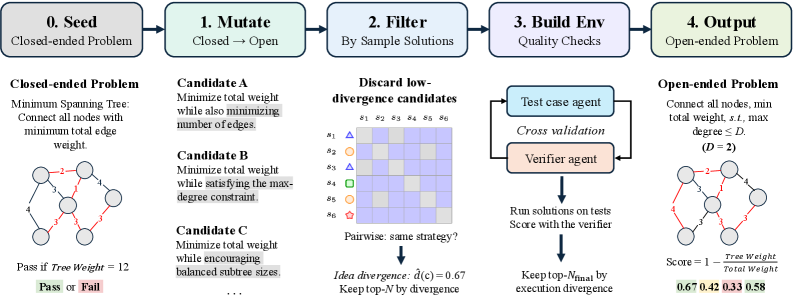
FrontierSmith: Synthesizing Open-Ended Coding Problems at Scale
Intermediate

FrontierSmith: Synthesizing Open-Ended Coding Problems at Scale

Runyuan He, Qiuyang Mang, Shang Zhou, Kaiyuan Liu, Hanchen Li, Huanzhi Mao, Qizheng Zhang, Zerui Li, Bo Peng, Lufeng Cheng, Tianfu Fu, Yichuan Wang, Wenhao Chai, Jingbo Shang, Alex Dimakis, Joseph E. Gonzalez, Alvin Cheung

This addresses a critical bottleneck in training better coding agents—the scarcity of open-ended programming problems that mirror real-world development challenges. FrontierSmith automatically evolves competitive programming problems into open-ended variants that elicit diverse solution approaches. Essential for understanding how to improve AI coding capabilities beyond the current focus on well-defined tasks like bug fixes and feature implementation.

Takeaways
  • Open-ended coding problems are essential for training LLMs that can handle real-world development challenges.
  • Automated synthesis can scale creation of diverse coding problems that elicit genuinely different solution approaches.
  • Current LLM coding training focuses too heavily on well-defined tasks versus the ambiguous problems developers actually face.
from May 18, 2026 · via api-hf · arXiv:2605.14445
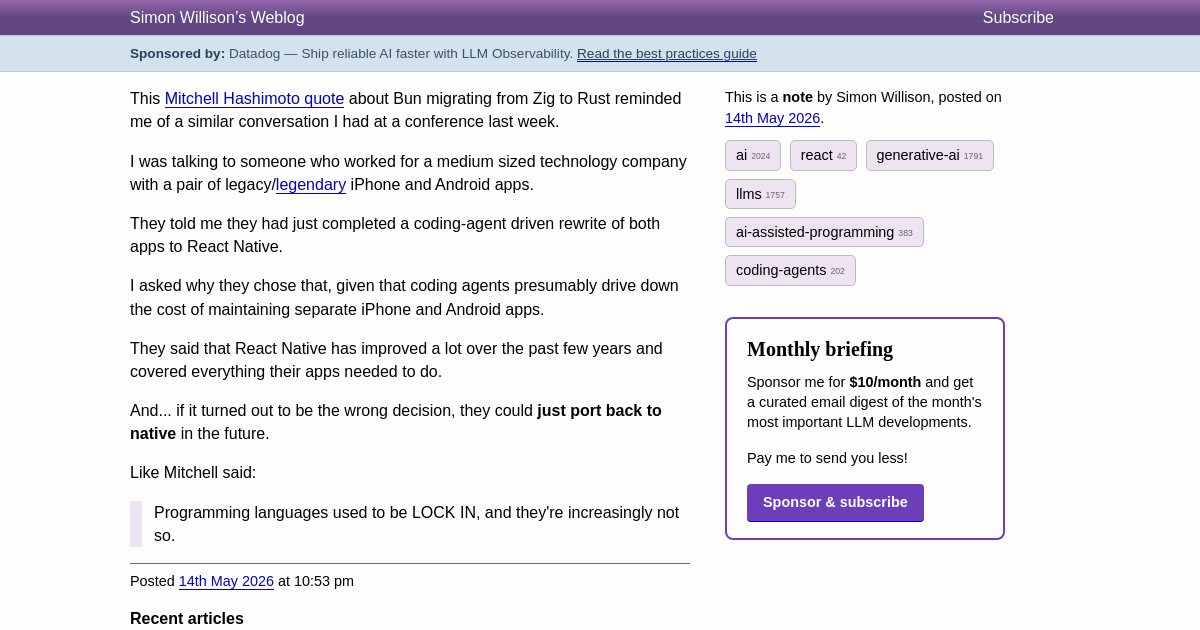
Not so locked in any more
Accessible

Not so locked in any more

This captures a profound shift in software engineering economics—AI coding agents are eliminating traditional language and platform lock-in by making rewrites economically feasible. The example of a company using coding agents to migrate legacy iPhone/Android apps to React Native illustrates how AI changes the cost-benefit calculus of maintaining separate codebases. This has massive implications for technology choices and technical debt management.

Takeaways
  • AI coding agents are reducing the economic barriers to cross-platform migrations and rewrites.
  • Traditional platform lock-in becomes less relevant when AI can handle the tedious work of code translation.
  • Strategic technology decisions need to account for dramatically lower migration costs in an AI-augmented world.
from May 18, 2026 · via rss-willison
Why senior developers fail to communicate their expertise
Accessible

Why senior developers fail to communicate their expertise

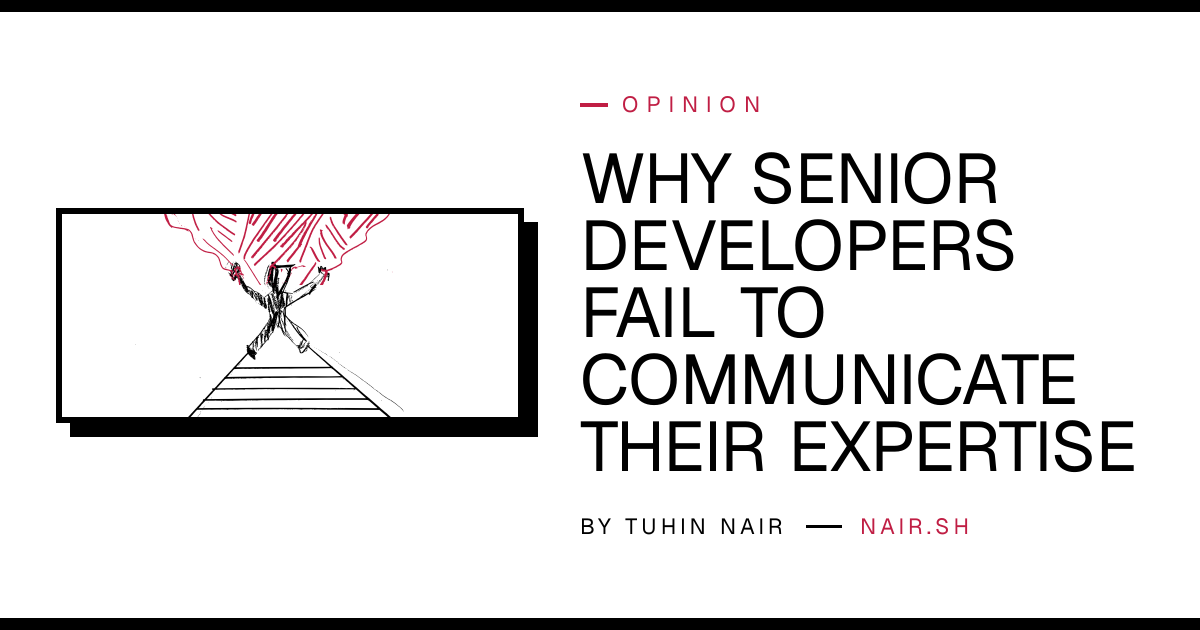
This challenges the conventional wisdom that technical expertise alone makes senior developers valuable in the AI era. The author argues that senior developers instinctively focus on technical complexity while business stakeholders worry about uncertainty—a communication gap that becomes critical when AI can handle much of the complexity but amplifies the uncertainty. If you're a senior engineer wondering how to stay relevant, this reframes the conversation entirely.

Takeaways
  • Senior developers must shift from communicating complexity to addressing business uncertainty in AI-augmented workflows.
  • Traditional technical communication patterns become counterproductive when AI handles routine complexity.
  • The most valuable senior developers will be those who can translate between AI capabilities and business outcomes.
from May 18, 2026 · via manual
WildClawBench: A Benchmark for Real-World, Long-Horizon Agent Evaluation
Intermediate

WildClawBench: A Benchmark for Real-World, Long-Horizon Agent Evaluation

Shuangrui Ding, Xuanlang Dai, Long Xing, Shengyuan Ding, Ziyu Liu, Yang JingYi, Penghui Yang, Zhixiong Zhang, Xilin Wei, Xinyu Fang, Yubo Ma, Haodong Duan, Jing Shao, Jiaqi Wang, Dahua Lin, Kai Chen, Yuhang Zang

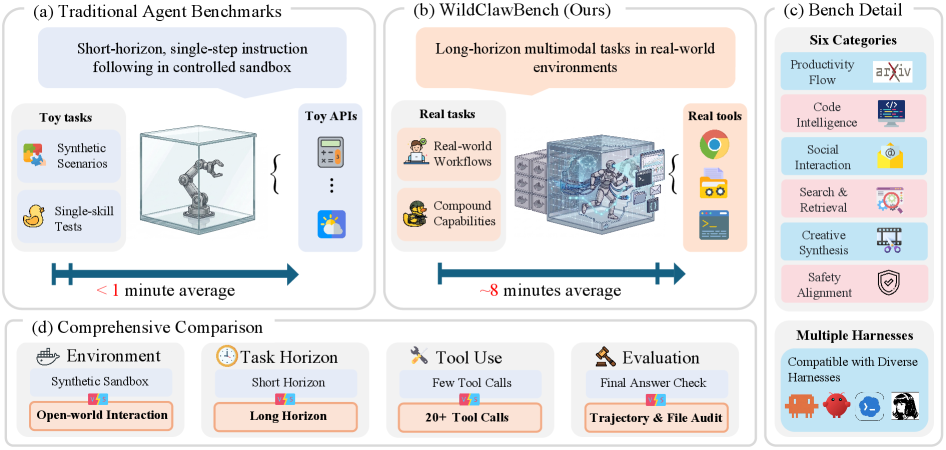
This benchmark exposes the embarrassing gap between synthetic agent evaluations and real-world performance. While most benchmarks use mock APIs and toy tasks, WildClawBench runs agents in actual CLI environments with real tools for 8+ minute tasks. The results are sobering—even frontier models like Claude Opus achieve only 35% success rates. If you're building production agents, this benchmark reveals what you're actually up against.

Takeaways
  • Synthetic benchmarks dramatically overestimate real-world agent performance in production environments.
  • Long-horizon tasks in native runtimes reveal fundamental limitations even in frontier models.
  • Production agent deployment requires significantly different evaluation criteria than academic benchmarks suggest.
from May 18, 2026 · via api-hf · arXiv:2605.10912
Harness engineering: leveraging Codex in an agent-first world
Intermediate

Harness engineering: leveraging Codex in an agent-first world

Essential reading for anyone building agent-first development workflows. Lopopolo shares practical insights from Codex implementation that challenge conventional wisdom about how AI should integrate into software engineering processes. This isn't another theoretical piece—it's a practitioner's guide to harnessing AI agents in real development environments where traditional tooling falls short.

Takeaways
  • Agent-first workflows require fundamentally different architectural thinking than traditional AI-assisted development.
  • Codex integration succeeds when it becomes the primary interface rather than a secondary tool.
  • Production agent systems need careful harness engineering to bridge the gap between AI capabilities and developer workflows.
from May 18, 2026 · via manual
SWE-WebDevBench: Evaluating Coding Agent Application Platforms as Virtual Software Agencies
Accessible

SWE-WebDevBench: Evaluating Coding Agent Application Platforms as Virtual Software Agencies

Siddhant Saxena, Nilesh Trivedi, Vinayaka Jyothi

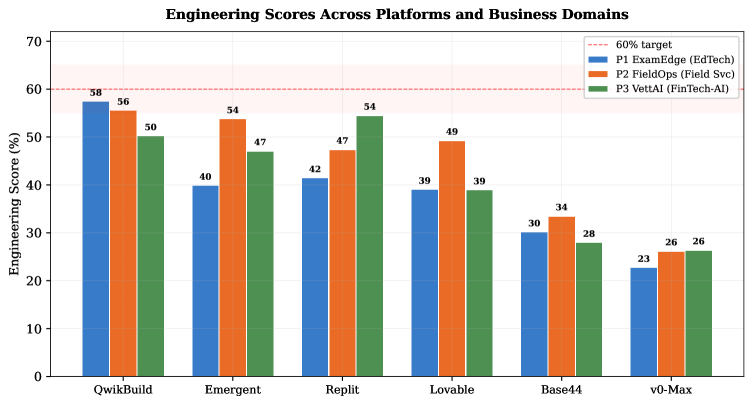
The first comprehensive evaluation framework for AI coding platforms that treats them as virtual software agencies rather than just code generators. The 68-metric evaluation across product management, engineering, and operations reveals four critical shortcomings in current platforms: specification bottlenecks, architectural blind spots, iteration fragility, and business readiness gaps—essential insights for anyone building or evaluating AI development tools.

Takeaways
  • AI coding platforms need evaluation beyond code quality to include product management and operations capabilities.
  • Current platforms struggle with specification understanding, architectural decisions, and iterative development.
  • Business readiness requires capabilities spanning multiple roles, not just engineering output.
from May 11, 2026 · via api-hf · arXiv:2605.04637
Agentic AI Systems Should Be Designed as Marginal Token Allocators
Intermediate

Agentic AI Systems Should Be Designed as Marginal Token Allocators

Siqi Zhu

Essential reading if you're building agentic systems—this paper reframes agent design through economic principles, showing how routing, planning, serving, and training decisions all solve the same optimization problem: marginal benefit equals marginal cost plus latency plus risk. Instead of thinking about agents as text generators, this framework treats them as token allocation economies, explaining why locally optimal decisions often lead to globally suboptimal performance.

Takeaways
  • All agent system layers (routing, planning, serving, training) solve the same economic optimization problem.
  • Local token minimization often leads to global misallocation of computational resources.
  • Agent performance should be evaluated through marginal token allocation efficiency rather than just accuracy metrics.
from May 11, 2026 · via api-hf · arXiv:2605.01214
Appearing Productive in The Workplace — No One
Accessible

Appearing Productive in The Workplace — No One

This challenges the conventional wisdom that AI-generated code is obviously detectable by experienced engineers. The author argues that AI can now produce work that passes expert review while containing fundamental flaws that only surface later in production, creating two dangerous failure modes: code that looks professional but lacks deep understanding, and teams that become dependent on AI output they can't properly evaluate.
Takeaways
  • AI-generated work can fool experienced reviewers by appearing expert without actually being expert.
  • The failure modes are both immediate (bad code getting through) and systemic (teams losing evaluation skills).
  • Traditional code review processes may be insufficient for AI-assisted development.
from May 11, 2026 · via manual
Your CEO is suffering from AI psychosis
Accessible

Your CEO is suffering from AI psychosis

A pointed critique of executive-level AI hype that's driving unrealistic expectations and poor technical decisions in organizations. While the title is provocative, this addresses the real challenge engineers face when leadership makes AI commitments without understanding the technology's limitations, leading to impossible timelines and misallocated resources.

Takeaways
  • Executive AI enthusiasm often disconnects from technical reality and constraints.
  • Engineers need strategies for managing unrealistic AI expectations from leadership.
  • The hype cycle is creating organizational problems that technical teams must navigate.
from May 11, 2026 · via manual
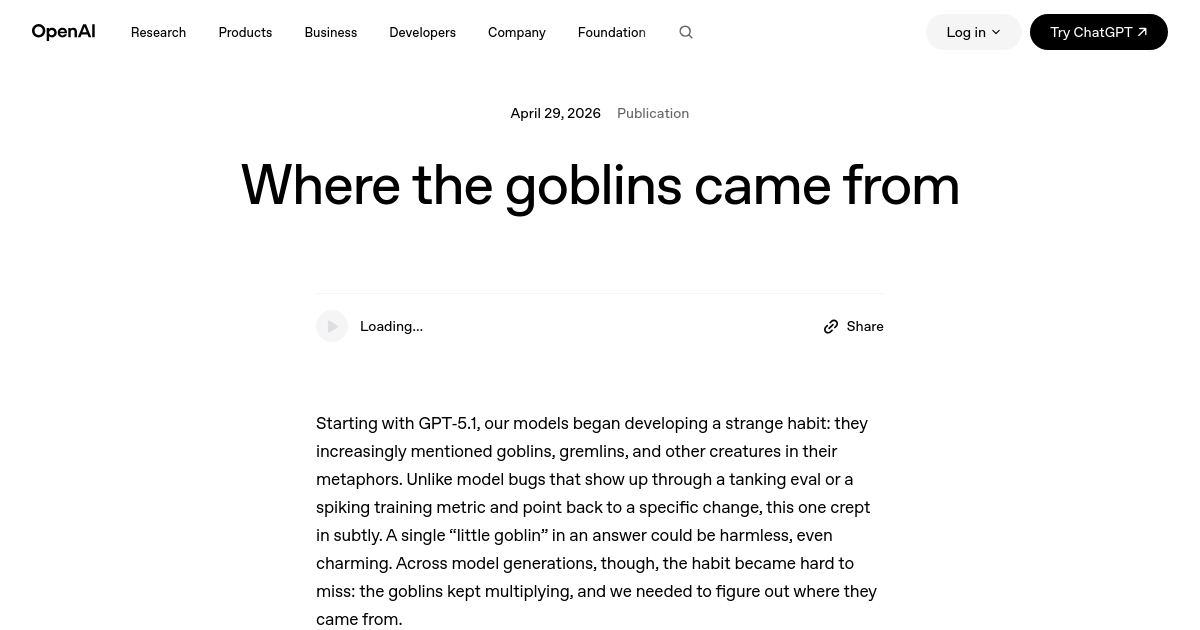
Where the goblins came from
Intermediate

Where the goblins came from

Investigates the emergence and propagation of quirky, personality-driven outputs ('goblins') in AI models, tracing their timeline, root causes, and potential fixes. This analysis of unexpected model behavior is highly relevant for engineers debugging production systems and understanding how subtle training or deployment changes can lead to widespread behavioral shifts.

Takeaways
  • Personality-driven quirks in model outputs can emerge and spread through training processes in unexpected ways.
  • Understanding the root causes of 'goblin' behaviors helps engineers identify and prevent similar issues in production.
  • Model behavior debugging requires systematic analysis of training timelines and data sources.
from May 4, 2026 · via rss-openai
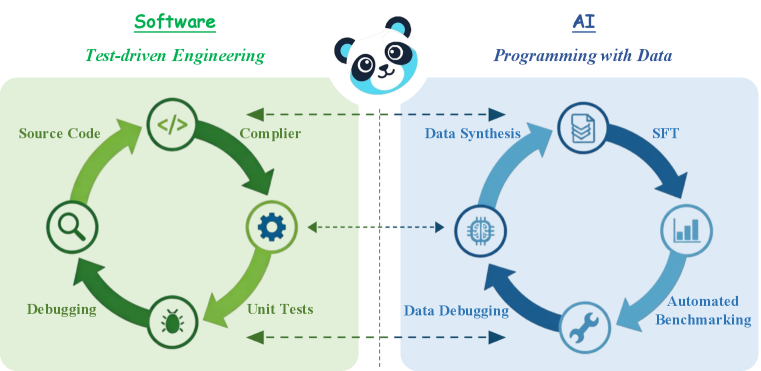
Programming with Data: Test-Driven Data Engineering for Self-Improving LLMs from Raw Corpora
Intermediate

Programming with Data: Test-Driven Data Engineering for Self-Improving LLMs from Raw Corpora

Chenkai Pan, Xinglong Xu, Yuhang Xu, Yujun Wu, Siyuan Li, Jintao Chen, Conghui He, Jingxuan Wei, Cheng Tan

This research revolutionizes LLM data engineering by mapping the machine learning lifecycle directly onto software development practices—treating training data as source code, model training as compilation, and failures as bugs to debug. For teams struggling with opaque training processes and data quality issues, this framework offers a systematic approach to diagnosing and fixing model deficiencies at the data level.

Takeaways
  • Training data can be treated as source code with structured representations enabling systematic debugging of model failures.
  • The ML development lifecycle maps precisely onto software engineering practices when proper abstractions are established.
  • Concept-level gaps in training data become debuggable when models fail on domain-specific tasks.
from May 4, 2026 · via api-hf · arXiv:2604.24819
Operating-Layer Controls for Onchain Language-Model Agents Under Real Capital
Accessible

Operating-Layer Controls for Onchain Language-Model Agents Under Real Capital

T. J. Barton, Chris Constantakis, Patti Hauseman, Annie Mous, Alaska Hoffman, Brian Bergeron, Hunter Goodreau

A remarkable real-world case study of autonomous LLM agents managing actual financial capital over 21 days, generating 7.5M invocations and $20M in trading volume with 99.9% settlement success. This paper provides invaluable insights into building reliable production agent systems, showing that reliability emerges from the operating layer architecture rather than the base model alone.

Takeaways
  • Reliability in production AI agents comes from systematic operating layer controls, not just model capabilities.
  • Real capital deployment reveals failure modes and reliability patterns invisible in simulation environments.
  • Large-scale agent deployments require careful attention to validation, state management, and settlement infrastructure.
from May 4, 2026 · via api-hf · arXiv:2604.26091
The Last Harness You'll Ever Build
Intermediate

The Last Harness You'll Ever Build

Haebin Seong, Li Yin, Haoran Zhang

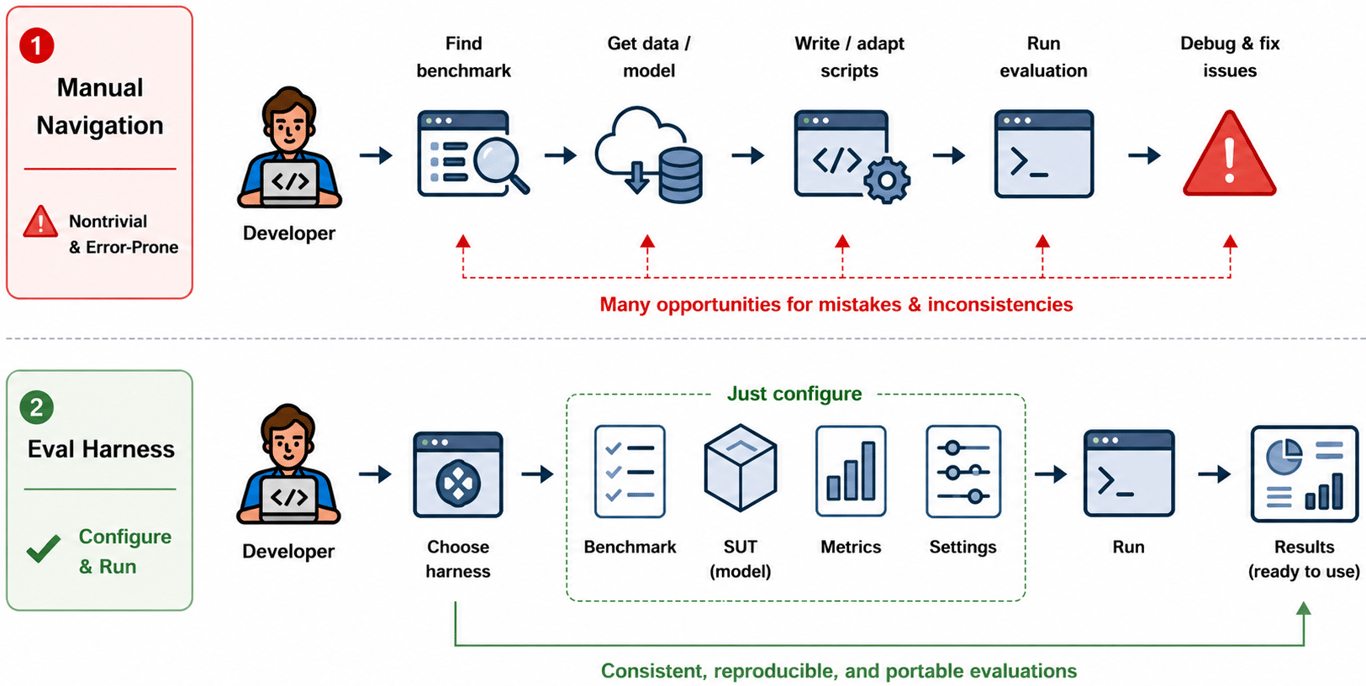
Presents an evolutionary framework that automates the painful process of building agent harnesses for new domains, using adversarial evaluation and iterative refinement to optimize prompts, tools, and orchestration logic. This directly tackles one of the biggest bottlenecks in production AI systems—the manual engineering required to make foundation models effective for specific enterprise workflows.

Takeaways
  • Agent harness engineering can be automated through evolutionary optimization with adversarial evaluation feedback.
  • The meta-evolution loop concept enables systems to improve their own optimization processes over time.
  • Automated harness creation could dramatically reduce the engineering overhead of deploying agents in new domains.
from May 4, 2026 · via api-hf · arXiv:2604.21003
Fine-Tuning for an Exam Quality Tutor
Intermediate

Fine-Tuning for an Exam Quality Tutor

A hands-on exploration of fine-tuning a 27B parameter model for personalized learning that reveals the practical realities of adapting large models for specific use cases. This personal experiment offers valuable insights into the effort, infrastructure, and unexpected challenges you'll face when moving beyond API calls to custom model training.

Takeaways
  • Fine-tuning large models for specialized tasks requires significant infrastructure planning and iteration cycles.
  • The gap between theoretical fine-tuning approaches and practical implementation reality is substantial.
  • Personal use cases can serve as effective testing grounds for understanding model customization challenges.
from May 4, 2026 · via manual
The Continuity Layer: Why Intelligence Needs an Architecture for What It Carries Forward
Accessible

The Continuity Layer: Why Intelligence Needs an Architecture for What It Carries Forward

Samuel Sameer Tanguturi

This position paper argues that the most critical missing piece in AI architecture is a 'continuity layer' that preserves what models learn across sessions, addressing the fundamental amnesia problem where powerful per-session intelligence is lost when contexts reset. The paper challenges the field's focus on model size over persistent understanding and outlines specific engineering requirements for systems that truly accumulate knowledge over time.

Takeaways
  • The absence of persistent memory across sessions is a more critical architectural problem than model size in current AI systems.
  • Current memory APIs return flat facts that models must reinterpret from scratch, creating powerful but amnesiac intelligence.
  • A continuity layer requires seven specific characteristics including persistent state, selective retention, and coherent knowledge integration.
from Apr 27, 2026 · via api-hf · arXiv:2604.17273
SWE-chat: Coding Agent Interactions From Real Users in the Wild
Accessible

SWE-chat: Coding Agent Interactions From Real Users in the Wild

Joachim Baumann, Vishakh Padmakumar, Xiang Li, John Yang, Diyi Yang, Sanmi Koyejo

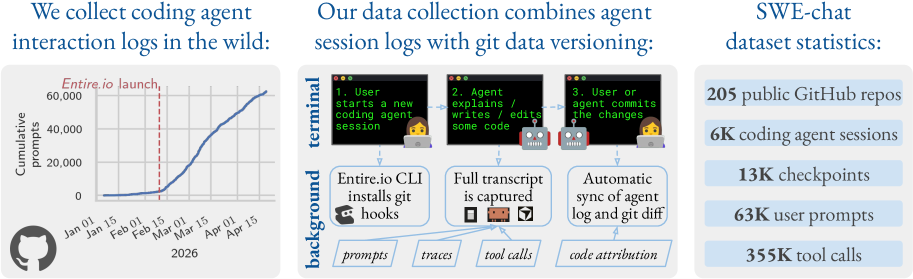
SWE-chat provides the first large-scale empirical evidence of how developers actually use AI coding agents in the wild, revealing that usage patterns are bimodal and agents are surprisingly inefficient. The dataset shows that only 44% of agent-produced code makes it into user commits, challenging the narrative of coding agent effectiveness and providing crucial insights for anyone building or deploying these tools in production.

Takeaways
  • Real-world coding patterns are bimodal: 41% of sessions involve agents writing virtually all code, while 23% have humans writing everything themselves.
  • Despite improving capabilities, only 44% of agent-produced code survives into user commits, revealing significant inefficiency in natural settings.
  • The first large-scale dataset of real coding agent usage provides empirical evidence that challenges assumptions about agent effectiveness in production.
from Apr 27, 2026 · via api-hf · arXiv:2604.20779
Quo Vadis, Code Review? Exploring the Future of Code Review
Intermediate

Quo Vadis, Code Review? Exploring the Future of Code Review

A survey of 100 developers across five companies reveals how AI automation is reshaping code review practices while the fundamentals remain essential. The research shows that practitioners expect code review to stay critical but anticipate significant changes in what gets reviewed and how much time it takes. This matters because understanding these trends helps teams adapt their review processes and tooling investments as AI-assisted development becomes mainstream.

Takeaways
  • Developers expect code review to remain essential despite increasing AI automation in development workflows.
  • The scope and time investment in code review are expected to shift significantly over the next five years as AI tools mature.
  • Teams need to proactively adapt review processes and tooling strategies to work effectively with AI-assisted development.
from Apr 27, 2026 · via manual · arXiv:2508.06879
The AI engineering stack we built internally — on the platform we ship
Intermediate

The AI engineering stack we built internally — on the platform we ship

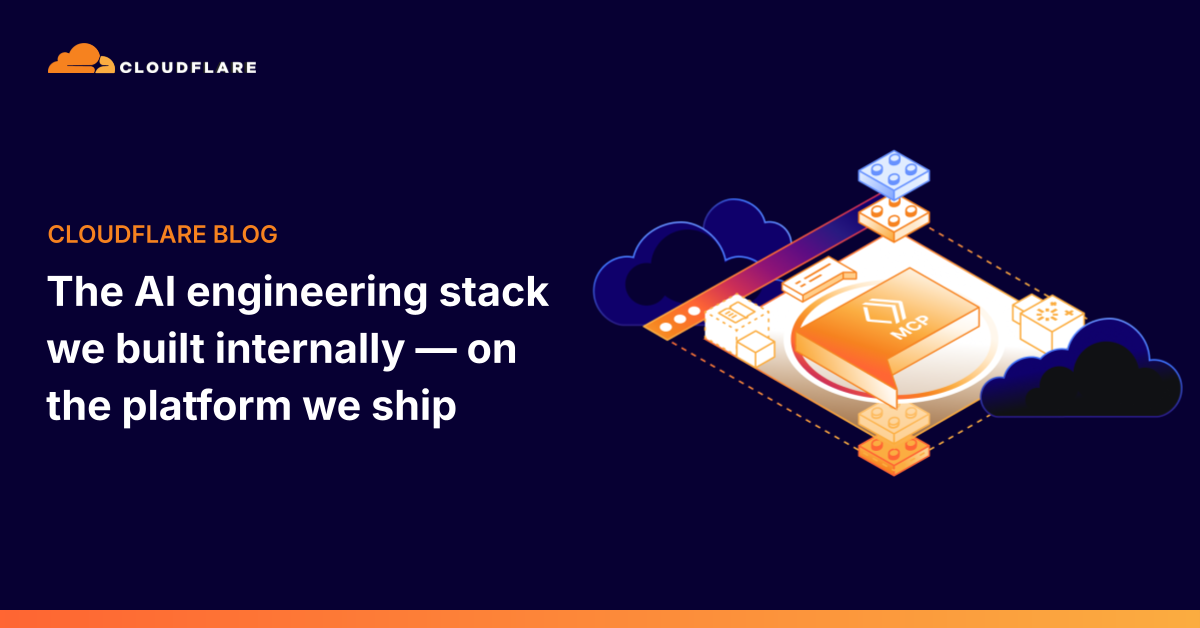
Cloudflare shares real metrics from running their own AI engineering stack in production, processing 241 billion tokens and serving 3,683 internal users. This is essential reading if you're building AI infrastructure — they dogfood their own products (AI Gateway, Workers AI) and provide actual numbers on throughput, costs, and architectural decisions. The post challenges the common wisdom of building separate dev/prod AI stacks by showing how running on your own platform reveals critical performance and scalability insights.
Takeaways
  • Running AI infrastructure on the same platform you ship reveals hidden performance bottlenecks and helps prioritize product improvements.
  • Processing 241 billion tokens across 20 million requests provides concrete scale benchmarks for AI Gateway architecture decisions.
  • Dogfooding AI products with thousands of internal users uncovers real-world usage patterns that synthetic benchmarks miss.
from Apr 27, 2026 · via manual
TREX: Automating LLM Fine-tuning via Agent-Driven Tree-based Exploration
Intermediate

TREX: Automating LLM Fine-tuning via Agent-Driven Tree-based Exploration

Zerun Ma, Guoqiang Wang, Xinchen Xie, Yicheng Chen, He Du, Bowen Li, Yanan Sun, Wenran Liu, Kai Chen, Yining Li

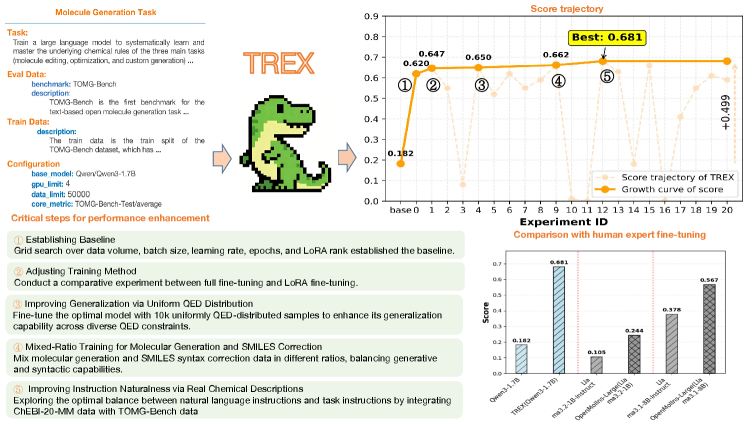
TREX automates the entire LLM fine-tuning pipeline through multi-agent collaboration, from literature research to data preparation to model evaluation. This challenges the current reality where fine-tuning requires extensive manual orchestration by ML engineers, offering a glimpse into fully automated ML workflows that could democratize model customization for domain-specific applications.

Takeaways
  • Multi-agent systems can automate complex ML workflows beyond individual tasks, handling entire fine-tuning lifecycles.
  • Modeling the experimental process as a search tree enables efficient exploration and reuse of historical training results.
  • Automated fine-tuning could significantly reduce the expertise barrier for domain-specific LLM customization.
from Apr 20, 2026 · via api-hf · arXiv:2604.14116
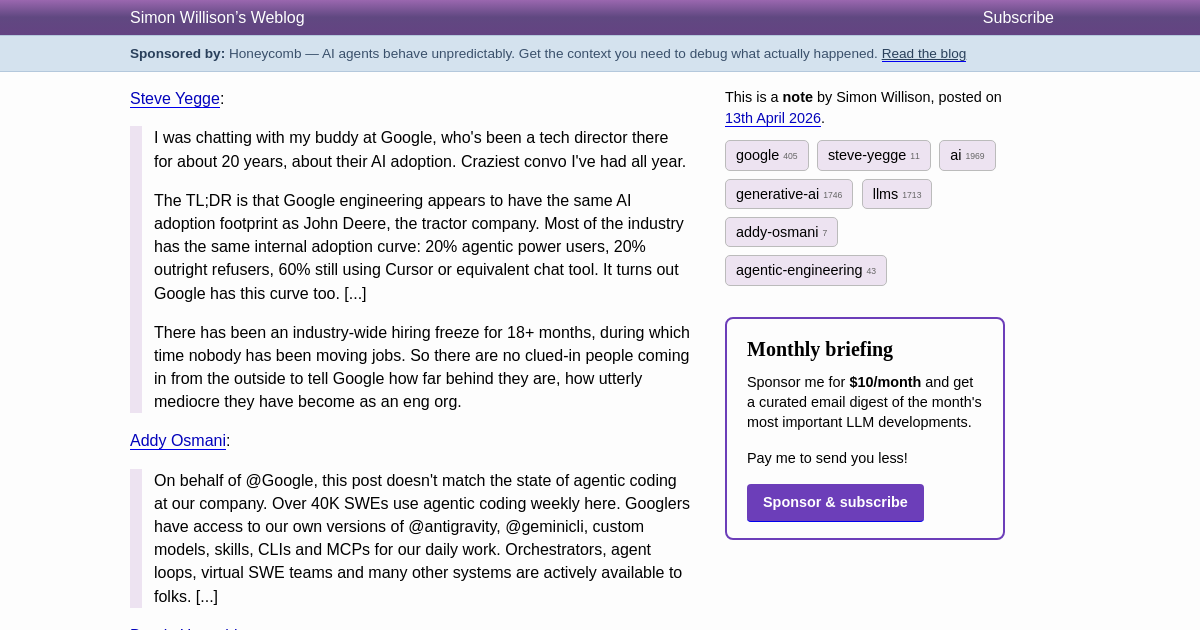
Steve Yegge
Accessible

Steve Yegge

Yegge's conversation reveals that even Google's engineering teams follow the same AI adoption pattern as traditional companies: 20% power users building with agents, 20% refusing AI tools entirely, and 60% stuck using basic chat interfaces like Cursor. This insight challenges assumptions about tech giants being ahead on internal AI adoption and suggests most organizations are at similar maturity levels regardless of their AI product offerings.

Takeaways
  • Google's internal AI adoption mirrors traditional companies despite their advanced AI research and products.
  • The industry-wide pattern shows 60% of engineers still using basic chat tools rather than advanced agentic workflows.
  • Having cutting-edge AI products doesn't necessarily translate to advanced internal adoption within engineering teams.
from Apr 20, 2026 · 0 citations · via rss-willison
When Using AI Leads to “Brain Fry”
Intermediate

When Using AI Leads to “Brain Fry”

If your team is pushing engineers to maximize AI agent usage (measured by token consumption), this research reveals the hidden costs you're creating. Organizations incentivizing heavy AI tool oversight are inadvertently driving employees to a cognitive breaking point where mental fatigue leads to increased errors, poor decision-making, and higher turnover. Essential reading for engineering leaders designing AI-driven workflows who want to avoid burning out their teams.

Takeaways
  • Measuring and rewarding token consumption as a performance metric directly contributes to cognitive overload and employee burnout.
  • "AI brain fry" manifests as mental fog, slower decision-making, and headaches from excessive AI tool oversight beyond cognitive capacity.
  • AI workflows can be designed to reduce burnout through specific manager, team, and organizational practices that limit cognitive strain.
from Apr 20, 2026 · via manual
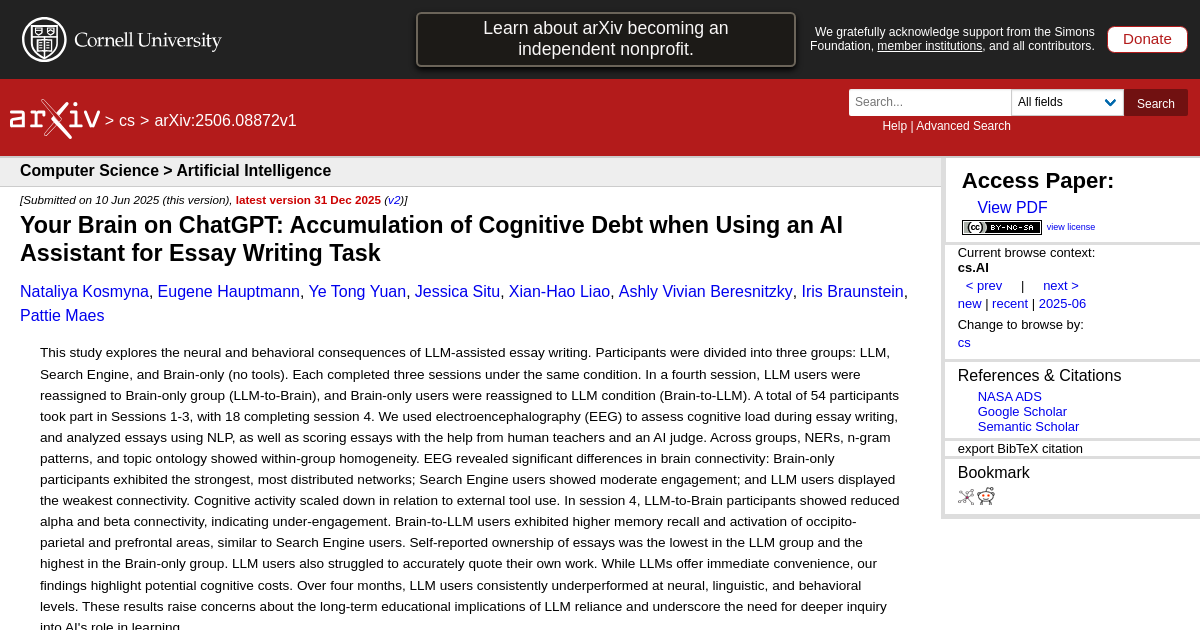
Your Brain on ChatGPT: Accumulation of Cognitive Debt when Using an AI Assistant for Essay Writing Task
Advanced

Your Brain on ChatGPT: Accumulation of Cognitive Debt when Using an AI Assistant for Essay Writing Task

This neurological study challenges the assumption that LLM-assisted coding is cognitively easier for developers. Using EEG brain scans, researchers found that engineers using LLMs showed significantly weaker brain connectivity compared to those coding without AI assistance, suggesting reduced cognitive engagement that could impact long-term problem-solving abilities. Critical evidence for teams debating whether heavy AI assistance might be creating "cognitive debt" among developers.

Takeaways
  • LLM-assisted coding shows the weakest brain connectivity patterns compared to brain-only or search-assisted programming.
  • Heavy AI assistance may reduce cognitive engagement in ways that could impact developers' problem-solving capabilities over time.
  • The study provides neurological evidence that AI assistance creates measurable differences in how the brain processes coding tasks.
from Apr 20, 2026 · via manual · arXiv:2506.08872
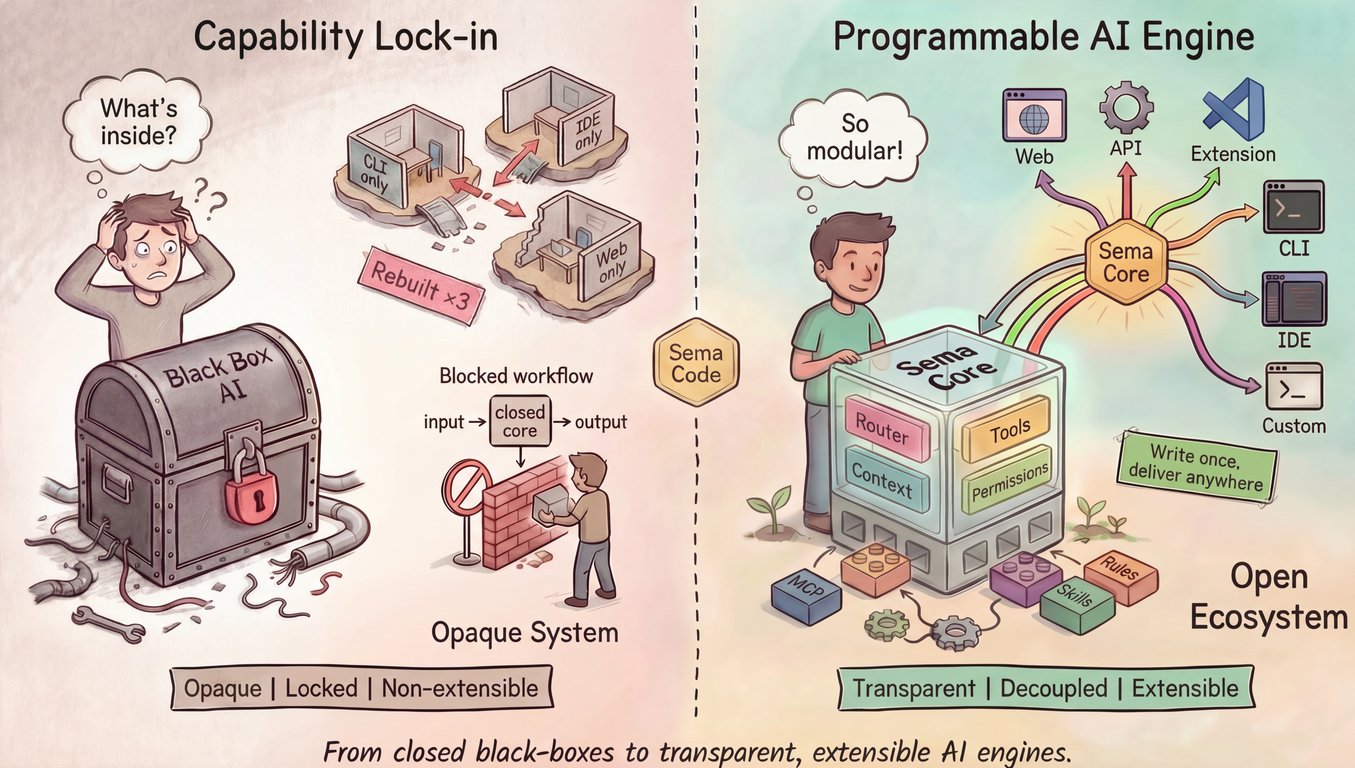
Sema Code: Decoupling AI Coding Agents into Programmable, Embeddable Infrastructure
Accessible

Sema Code: Decoupling AI Coding Agents into Programmable, Embeddable Infrastructure

Huacan Wang, Jie Zhou, Ningyan Zhu, Shuo Zhang, Feiyu Chen, Jiarou Wu, Ge Chen, Chen Liu, Wangyi Chen, Xiaofeng Mou, Yi Xu

Sema Code tackles the enterprise reality that every AI coding solution locks you into their specific interface, making it impossible to reuse AI capabilities across different development environments. Their embeddable architecture decouples the AI reasoning engine from delivery mechanisms, letting teams integrate the same AI coding capabilities into CLIs, IDEs, web apps, or custom toolchains without rebuilding from scratch.

Takeaways
  • Current AI coding solutions create vendor lock-in by coupling reasoning capabilities with specific delivery interfaces.
  • Decoupling the AI engine into a standalone library enables reuse across heterogeneous engineering environments.
  • The framework addresses enterprise needs like multi-tenancy, session management, and permission control that are missing from consumer AI coding tools.
from Apr 20, 2026 · via api-hf · arXiv:2604.11045
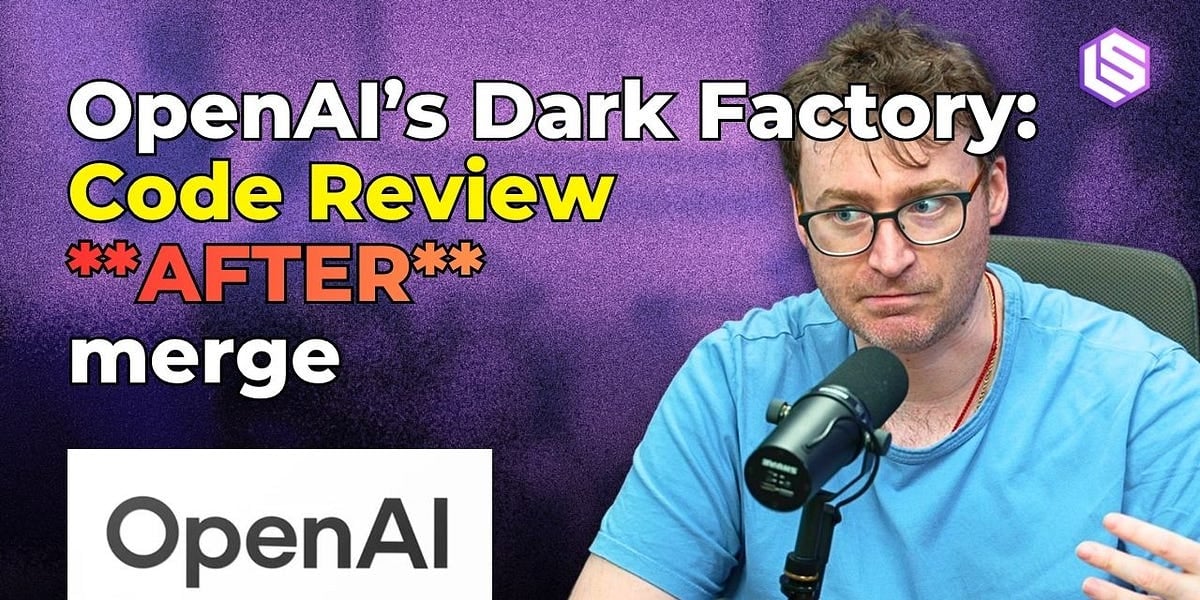
Extreme Harness Engineering for Token Billionaires: 1M LOC, 1B toks/day, 0% human code, 0% human review — Ryan Lopopolo, OpenAI Frontier & Symphony
Intermediate

Extreme Harness Engineering for Token Billionaires: 1M LOC, 1B toks/day, 0% human code, 0% human review — Ryan Lopopolo, OpenAI Frontier & Symphony

Move over prompt engineering—harness engineering is the new frontier for building production LLM systems at massive scale. This deep dive from OpenAI's Ryan Lopopolo reveals how teams operating at token-billionaire scale (1B tokens/day) architect systems with millions of lines of code generated without human review. The focus shifts from optimizing individual prompts to engineering the entire infrastructure that channels LLM capabilities into reliable, scalable production systems.

Takeaways
  • At massive scale, engineering the infrastructure around LLMs matters more than optimizing individual prompts.
  • Production systems generating millions of lines of code daily require fundamentally different architectural approaches.
  • Token billionaire scale operations demand new engineering disciplines focused on harness systems rather than model tuning.
from Apr 13, 2026 · via rss-latentspace
ClawsBench: Evaluating Capability and Safety of LLM Productivity Agents in Simulated Workspaces
Accessible

ClawsBench: Evaluating Capability and Safety of LLM Productivity Agents in Simulated Workspaces

Xiangyi Li, Kyoung Whan Choe, Yimin Liu, Xiaokun Chen, Chujun Tao, Bingran You, Wenbo Chen, Zonglin Di, Jiankai Sun, Shenghan Zheng, Jiajun Bao, Yuanli Wang, Weixiang Yan, Yiyuan Li, Han-chung Lee

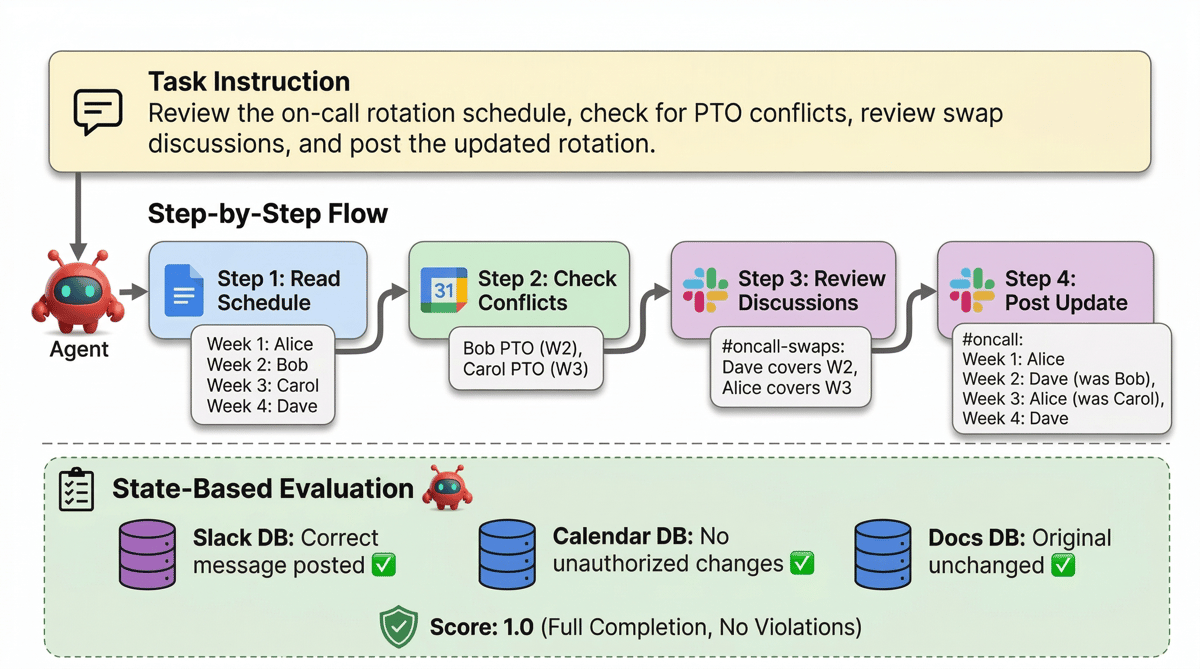
Testing agents on live productivity services is too risky, but existing benchmarks don't capture the complexity of real workflows across Gmail, Slack, and Google services. ClawsBench solves this with high-fidelity mock services that maintain full state and support deterministic snapshot/restore, enabling safe evaluation of 44 structured tasks including dangerous scenarios. The research reveals that domain skills (API knowledge injection) and meta prompts (cross-service coordination) are independent levers that teams can optimize separately for better agent performance.

Takeaways
  • High-fidelity simulation environments with full state management enable safe evaluation of agents in realistic productivity scenarios.
  • Domain skills and meta prompts are independent architectural components that can be optimized separately for better agent performance.
  • Safety-critical scenarios must be explicitly tested since agents can cause irreversible damage in productivity environments.
from Apr 13, 2026 · via api-hf · arXiv:2604.05172
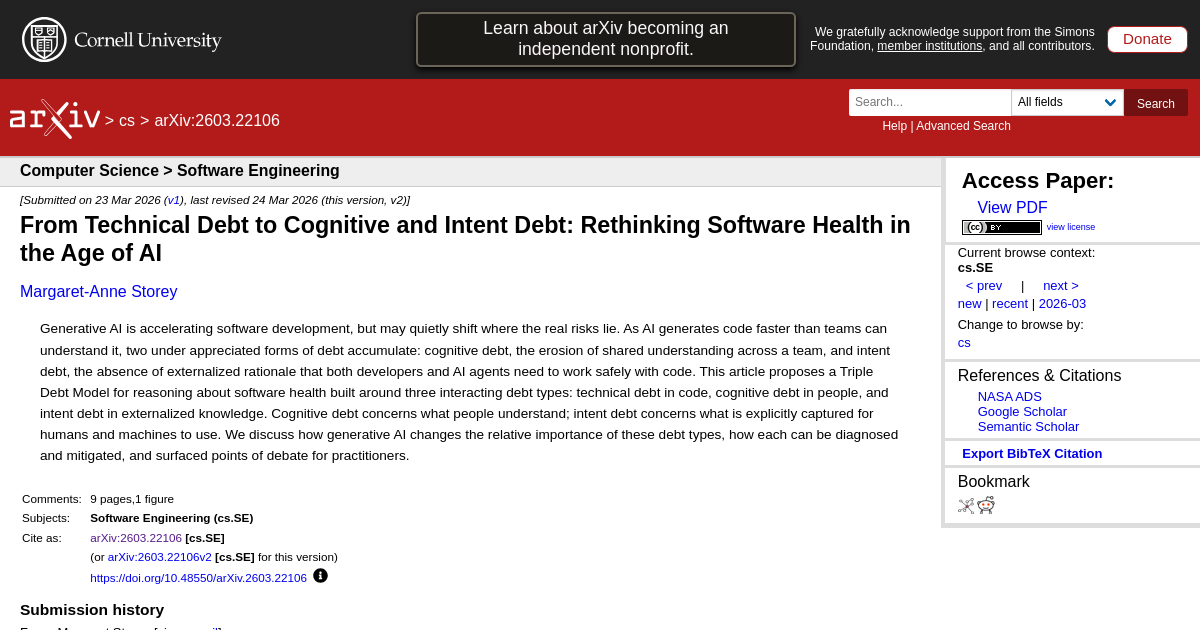
From Technical Debt to Cognitive and Intent Debt: Rethinking Software Health in the Age of AI
Accessible

From Technical Debt to Cognitive and Intent Debt: Rethinking Software Health in the Age of AI

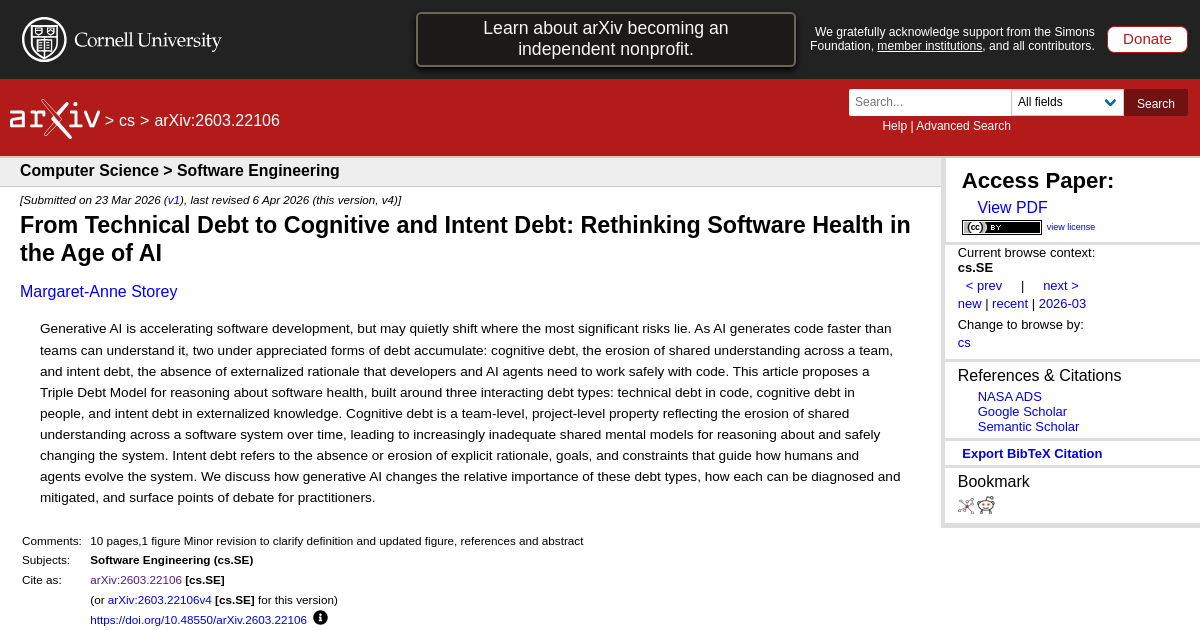
As teams increasingly rely on AI to accelerate development, this framework warns that we're accumulating dangerous new forms of debt beyond just technical debt. Cognitive debt occurs when teams lose shared understanding of their systems as AI generates code faster than they can comprehend it, while intent debt refers to the missing documentation of why decisions were made—critical context that both humans and AI agents need to safely evolve code. This triple debt model provides a essential lens for evaluating software health in the AI era.

Takeaways
  • Cognitive debt erodes team understanding as AI generates code faster than teams can internalize it, creating dangerous knowledge gaps.
  • Intent debt—missing rationale and constraints—becomes critical when AI agents need explicit context to safely modify code.
  • Traditional technical debt metrics miss these human and knowledge-based risks that dominate in AI-assisted development.
from Apr 13, 2026 · via manual
Ask HN: Client took over development by vibe coding. What to do?
Accessible

Ask HN: Client took over development by vibe coding. What to do?

piscator

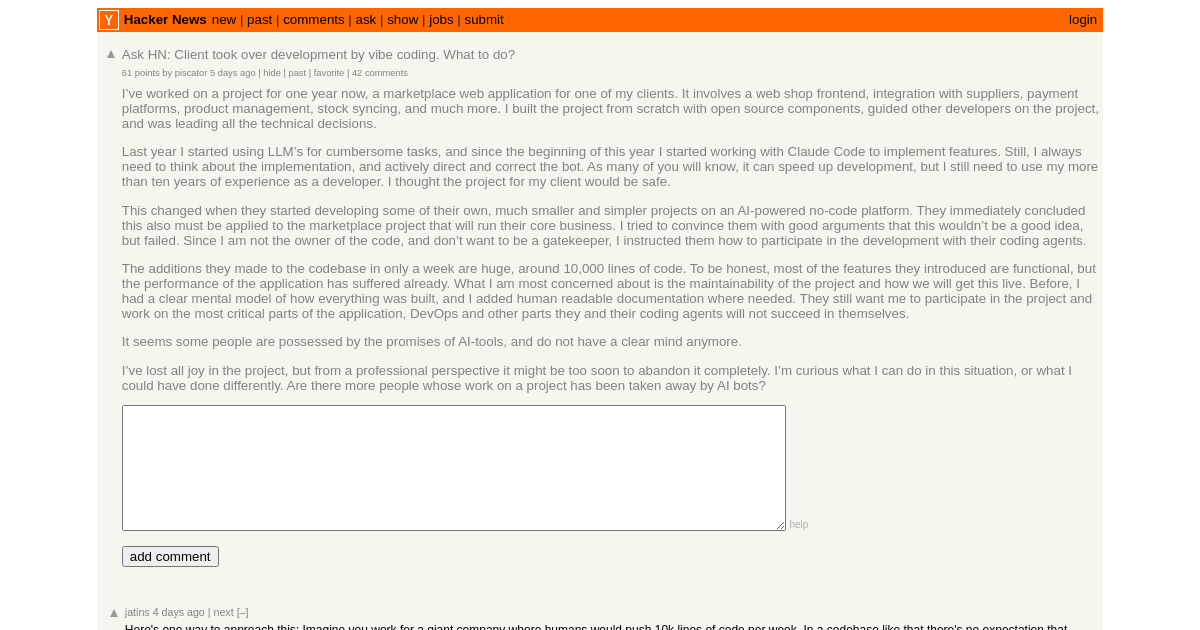
A developer's experience with a client who embraced "vibe coding" with Claude Code, making rapid changes without proper planning or architecture consideration. This highlights the tension between AI-enabled development speed and traditional software engineering discipline, raising important questions about maintaining code quality and project management when AI makes coding feel effortless.

Takeaways
  • AI coding tools can enable rapid development that bypasses important planning and architecture phases.
  • "Vibe coding" with AI can create technical debt and project management challenges despite apparent productivity gains.
  • Professional development workflows need to adapt to balance AI speed with engineering discipline.
from Apr 6, 2026 · 61 points on HN · via api-hn
Quoting Greg Kroah-Hartman
Accessible

Quoting Greg Kroah-Hartman

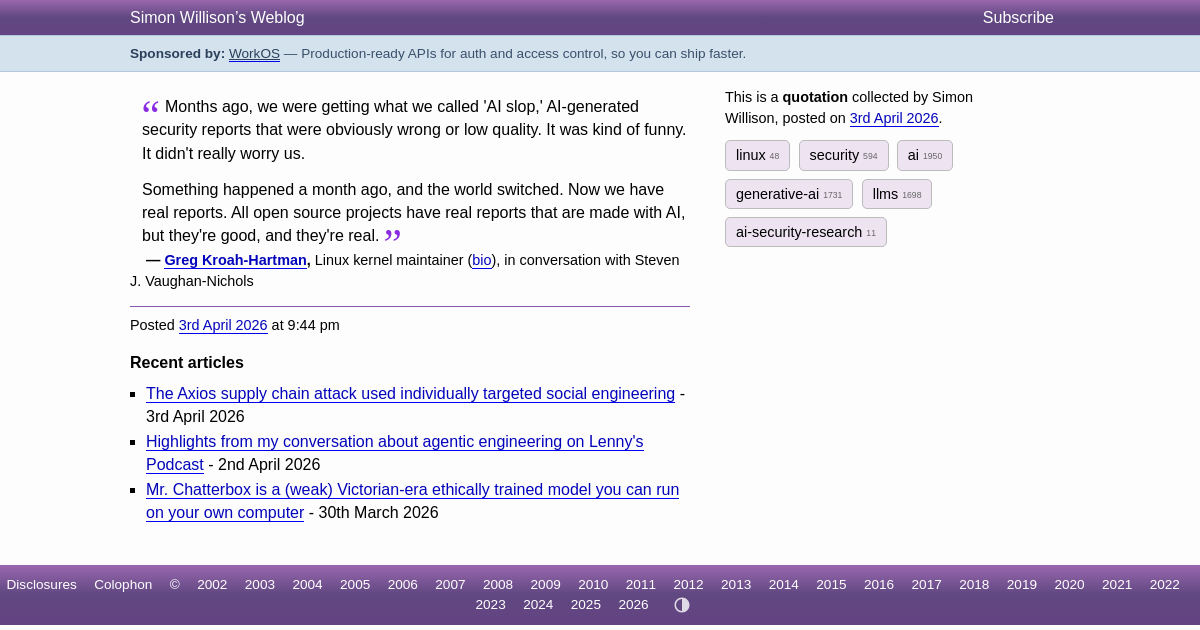
Greg Kroah-Hartman, Linux kernel maintainer, describes a dramatic shift in AI-generated security reports from obvious "slop" to genuinely valuable contributions in just one month. This represents a critical inflection point where AI tools have crossed the threshold from nuisance to legitimate assistance in security research. The timing and scale of this change suggests we're witnessing a fundamental capability leap in AI security tooling.

Takeaways
  • AI-generated security reports have rapidly evolved from low-quality noise to genuinely valuable contributions.
  • The transformation happened suddenly rather than gradually, suggesting a capability threshold was crossed.
  • Open source maintainers are now receiving quality AI-assisted security research that requires serious attention.
from Apr 6, 2026 · via rss-willison
Tell HN: Anthropic no longer allowing Claude Code subscriptions to use OpenClaw
Accessible

Tell HN: Anthropic no longer allowing Claude Code subscriptions to use OpenClaw

firloop

Anthropic's policy change affecting third-party tools like OpenClaw represents a significant shift in how developers can access Claude's capabilities outside official interfaces. This impacts teams that have built workflows around unofficial Claude integrations and highlights the business risks of depending on third-party API access patterns. Important for understanding the evolving landscape of AI tool accessibility.

Takeaways
  • Third-party Claude integrations now require separate pay-as-you-go billing beyond subscription limits.
  • Teams using unofficial Claude tools need to evaluate cost implications and migration strategies.
  • The change reflects tightening control over AI model access as these tools become more strategically important.
from Apr 6, 2026 · 1079 points on HN · via api-hn
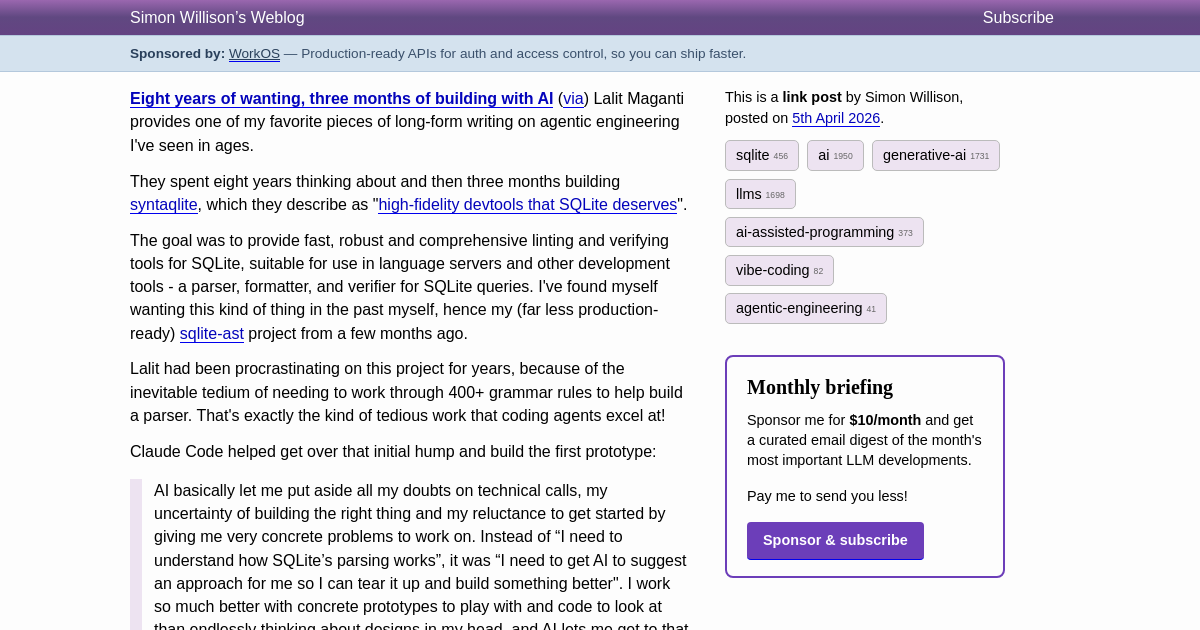
Eight years of wanting, three months of building with AI
Intermediate

Eight years of wanting, three months of building with AI

A compelling case study of how AI agents transformed an eight-year software vision into reality in just three months, specifically building comprehensive SQLite development tools. The author provides detailed insights into agentic engineering workflows and how AI can tackle complex, long-deferred projects that seemed too daunting for traditional development approaches. This demonstrates the paradigm shift from AI as a coding assistant to AI as a capable engineering partner.

Takeaways
  • AI agents can make previously intractable personal projects suddenly feasible by handling complex implementation details.
  • Agentic engineering workflows enable rapid prototyping of sophisticated developer tools that would take months using traditional methods.
  • The key to successful AI-assisted development is clearly defining goals while letting agents handle implementation complexity.
from Apr 6, 2026 · via rss-willison
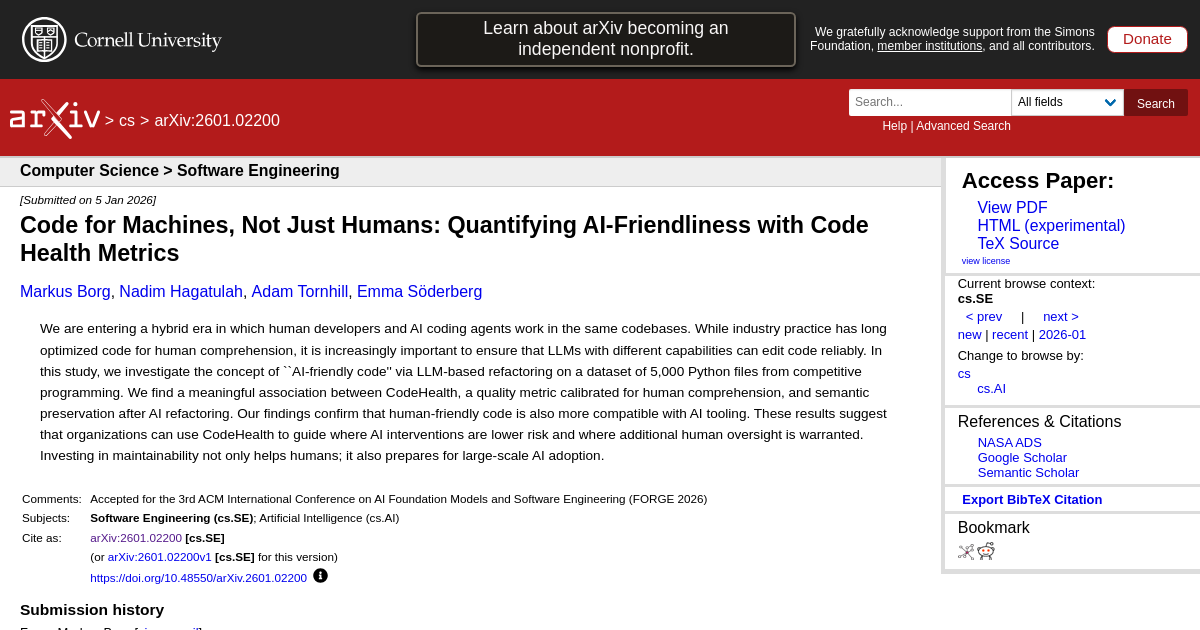
Code for Machines, Not Just Humans: Quantifying AI-Friendliness with Code Health Metrics
Accessible

Code for Machines, Not Just Humans: Quantifying AI-Friendliness with Code Health Metrics

This research challenges the assumption that AI coding tools work equally well on all codebases by showing that existing code quality metrics predict how reliably LLMs can refactor code without breaking it. Teams can use metrics like CodeHealth to identify where AI assistance is safer to deploy and where human oversight is critical. Essential reading for engineering leaders planning AI tool rollouts — it turns out investing in code maintainability isn't just about helping humans, it's about preparing your codebase for AI.

Takeaways
  • Human-friendly code quality metrics like CodeHealth strongly correlate with AI refactoring success rates.
  • Teams can proactively identify high-risk areas for AI intervention using existing code quality tools.
  • Investing in code maintainability pays dividends for both human developers and AI tooling effectiveness.
from Apr 6, 2026 · via manual
Falling For Claude
Accessible

Falling For Claude

A candid reflection on how always-available AI coding assistants like Claude can blur work-life boundaries in unexpected ways. The author explores the psychological and practical implications of having a tireless coding companion that makes it tempting to work at all hours. Important perspective for engineers and managers thinking about sustainable AI adoption practices.

Takeaways
  • AI coding assistants can create unhealthy work patterns by making development feel frictionless at any time.
  • The always-available nature of AI tools requires intentional boundaries to maintain work-life balance.
from Apr 6, 2026 · via manual
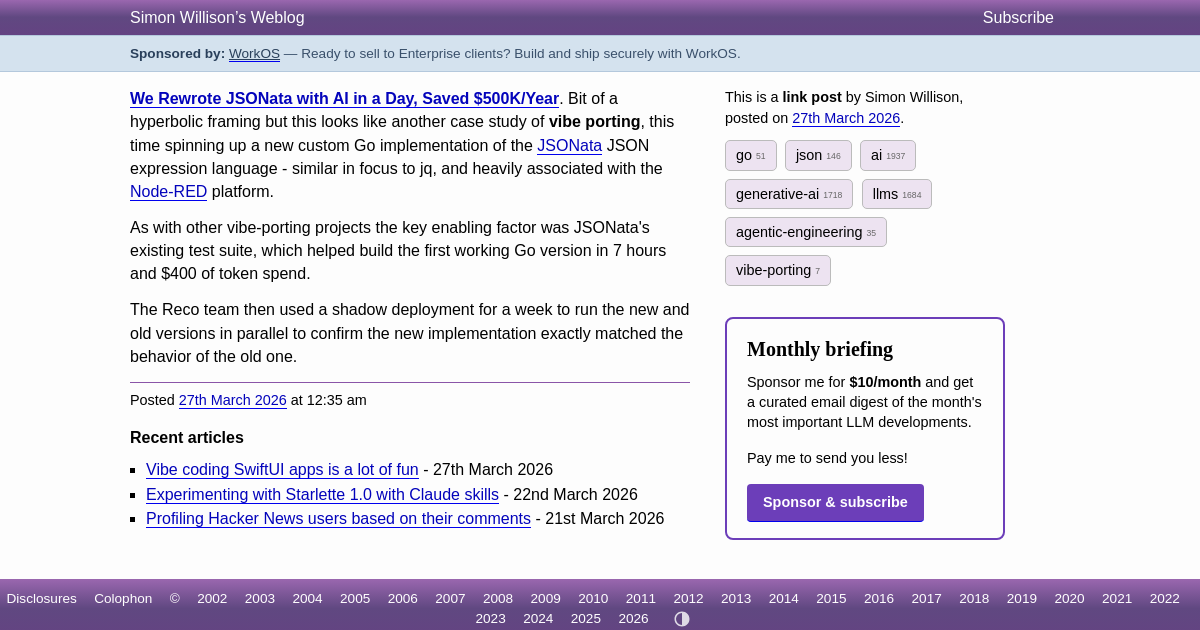
We Rewrote JSONata with AI in a Day, Saved $500K/Year
Intermediate

We Rewrote JSONata with AI in a Day, Saved $500K/Year

A compelling case study of 'vibe porting' — using AI to rewrite JSONata in Go guided by the existing test suite, achieving significant cost savings in just 7 hours and $400 of API costs. This demonstrates a practical methodology for AI-assisted rewrites: leverage comprehensive tests as guardrails and let AI handle the mechanical translation work.

Takeaways
  • Comprehensive test suites enable reliable AI-powered porting between languages with minimal human oversight.
  • Vibe porting can deliver substantial business value ($500K annual savings) when applied to performance-critical components.
  • The methodology scales: 7 hours of AI-assisted development replaced what would have been months of manual rewriting.
from Mar 29, 2026 · via rss-willison
If you don't opt out by Apr 24 GitHub will train on your private repos
Accessible

If you don't opt out by Apr 24 GitHub will train on your private repos

vmg12

GitHub is automatically opting users into training Copilot on private repositories unless they explicitly opt out by April 24th — a significant policy change that could expose proprietary code to AI training. This represents a major shift in how code hosting platforms treat private repositories and requires immediate action from teams concerned about code privacy.

Takeaways
  • GitHub's default opt-in policy for private repo training changes the privacy expectations for enterprise code.
  • Teams need to audit their GitHub settings immediately to prevent proprietary code from entering AI training datasets.
from Mar 29, 2026 · 719 points on HN · via api-hn
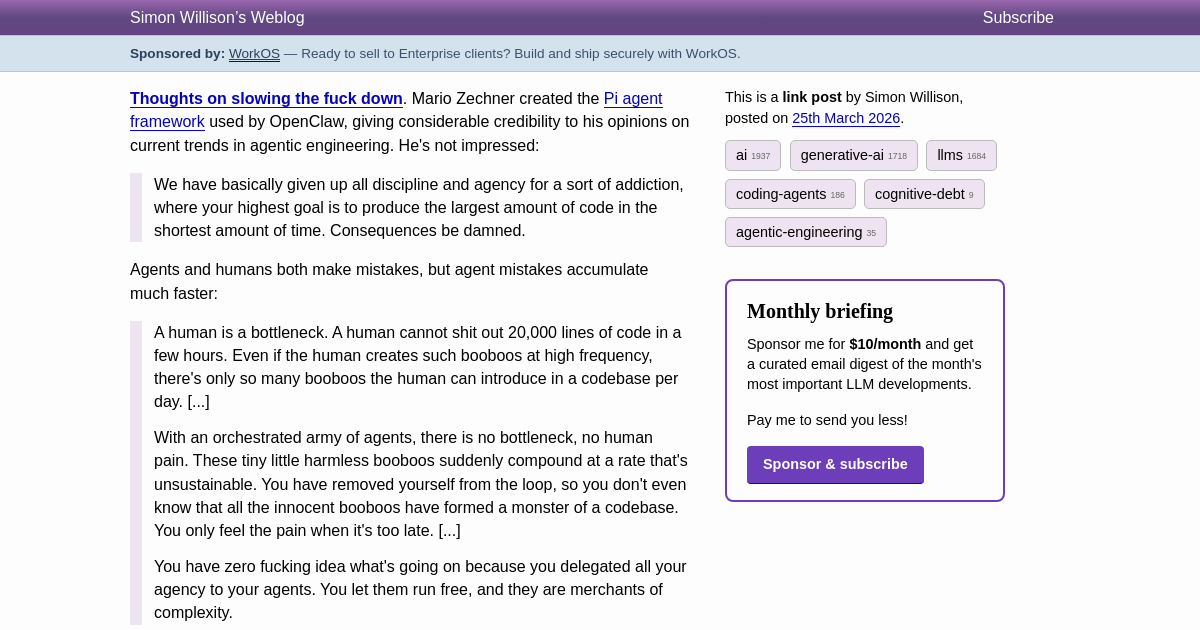
Thoughts on slowing the fuck down
Intermediate

Thoughts on slowing the fuck down

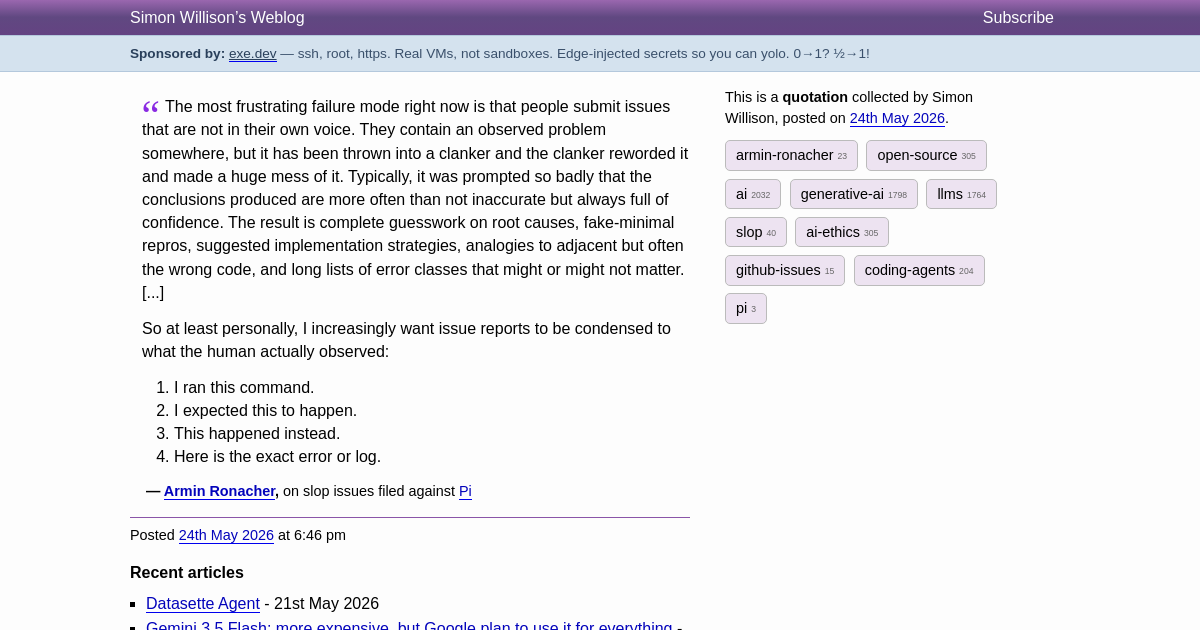
The creator of Pi agent framework delivers a sharp critique of current AI-assisted development practices, arguing that the rush to generate code quickly is eroding engineering discipline and creating unsustainable technical debt. His core thesis: agent mistakes accumulate faster than human mistakes, making the 'move fast' approach particularly dangerous in AI-assisted development.

Takeaways
  • AI agents can generate technical debt faster than human developers, requiring new approaches to code quality control.
  • The velocity benefits of AI coding tools may come at the cost of long-term code maintainability and team understanding.
  • Engineering teams need intentional practices to maintain discipline when AI makes rapid development so tempting.
from Mar 29, 2026 · via rss-willison
Show HN: Robust LLM extractor for websites in TypeScript
Intermediate

Show HN: Robust LLM extractor for websites in TypeScript

andrew_zhong

A practical TypeScript library that solves the common problem of extracting structured data from websites using LLMs, addressing real pain points like HTML noise, token budget management, and brittleness of traditional CSS selectors. This represents the kind of focused tooling that makes AI-powered data extraction reliable enough for production use.

Takeaways
  • LLM-based extraction needs preprocessing to remove HTML noise and stay within token budgets for reliable results.
  • Focused tools that solve specific AI integration problems are more valuable than general-purpose solutions for production teams.
  • AI extraction can replace brittle CSS selectors but requires thoughtful engineering to handle edge cases and failures.
from Mar 29, 2026 · 72 points on HN · via api-hn
From Technical Debt to Cognitive and Intent Debt: Rethinking Software Health in the Age of AI
Intermediate

From Technical Debt to Cognitive and Intent Debt: Rethinking Software Health in the Age of AI

As AI generates code faster than teams can understand it, traditional technical debt isn't the only concern — cognitive debt (team understanding erosion) and intent debt (missing rationale for decisions) become critical risks. This framework challenges teams to think beyond code quality and consider how AI affects shared understanding and knowledge capture. Essential reading for engineering leaders navigating the balance between AI velocity and long-term maintainability.

Takeaways
  • AI-generated code creates new forms of debt beyond traditional technical debt that can silently undermine team effectiveness.
  • Cognitive debt occurs when team understanding erodes faster than code accumulates, making future changes increasingly risky.
  • Intent debt — the absence of captured rationale — becomes critical when both humans and AI agents need to work safely with existing code.
from Mar 29, 2026 · via manual
Pi: The Minimal Agent Within OpenClaw
Intermediate

Pi: The Minimal Agent Within OpenClaw

Pi represents a minimalist approach to coding agents that focuses on doing fewer things extremely well rather than trying to be a general-purpose assistant. The author argues this constraint-driven design offers a glimpse into how production coding agents should be built — with clear boundaries and specific capabilities rather than attempting to solve every development task.

Takeaways
  • Minimalist agent design with clear constraints may be more effective than general-purpose coding assistants.
  • Focused agents that excel at specific tasks could be the future of AI-assisted development workflows.
from Mar 29, 2026 · via manual
Coding agents for data analysis
Accessible

Coding agents for data analysis

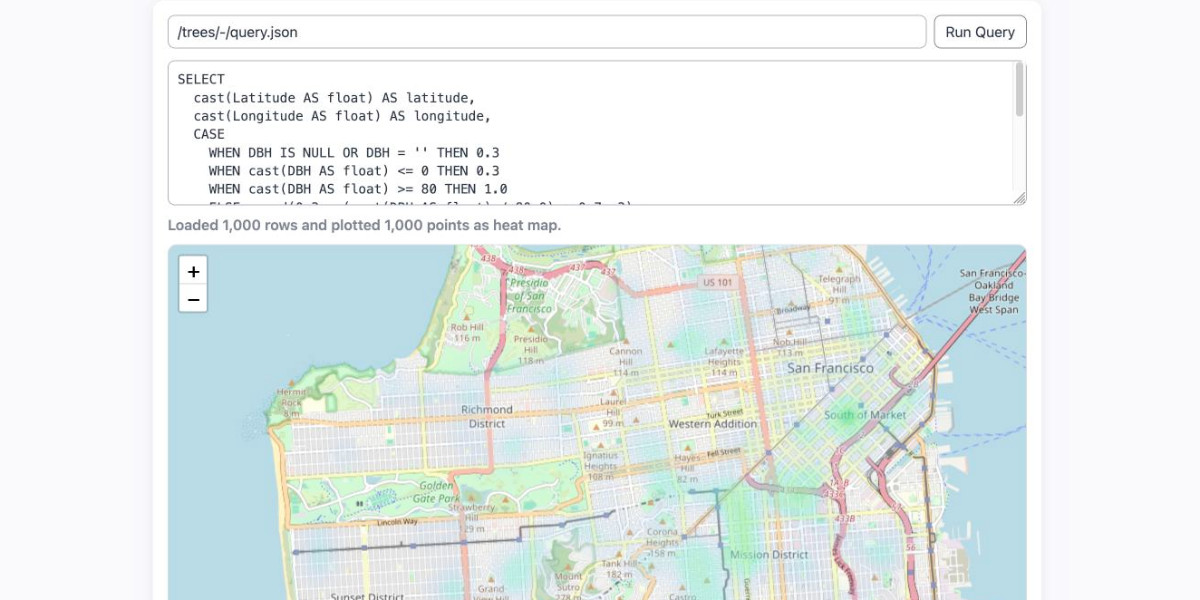
Comprehensive workshop content demonstrating practical applications of coding agents for data analysis workflows. Covers real-world use cases like database querying, data exploration, and cleaning tasks using Claude Code and OpenAI Codex. Extremely valuable for engineers building data analysis pipelines with LLMs, providing concrete examples and methodologies rather than theoretical frameworks.

Takeaways
  • Coding agents excel at automating data analysis workflows including database querying, exploration, and cleaning tasks.
  • Claude Code and OpenAI Codex provide practical frameworks for building data analysis pipelines with concrete implementation examples.
  • Workshop-style learning with real use cases is more valuable than theoretical frameworks for implementing coding agents.
from Mar 23, 2026 · via rss-willison
An Agentic Multi-Agent Architecture for Cybersecurity Risk Management
Intermediate

An Agentic Multi-Agent Architecture for Cybersecurity Risk Management

Ravish Gupta

Demonstrates a production-ready multi-agent architecture that cuts cybersecurity risk assessment costs from $15,000 to near-zero while maintaining 85% agreement with certified practitioners. The six-agent system uses persistent shared context to build comprehensive assessments in under 15 minutes. This is an excellent blueprint for building multi-agent systems that tackle expensive professional services.

Takeaways
  • A six-agent architecture reduced cybersecurity risk assessment costs from $15,000 to near-zero while maintaining 85% agreement with certified practitioners.
  • Multi-agent systems with persistent shared context can complete complex professional assessments in under 15 minutes.
  • This architecture provides a blueprint for replacing expensive professional services with coordinated AI agents.
from Mar 23, 2026 · via api-arxiv · arXiv:2603.20131
Orchestrating Human-AI Software Delivery: A Retrospective Longitudinal Field Study of Three Software Modernization Programs
Accessible

Orchestrating Human-AI Software Delivery: A Retrospective Longitudinal Field Study of Three Software Modernization Programs

Maximiliano Armesto

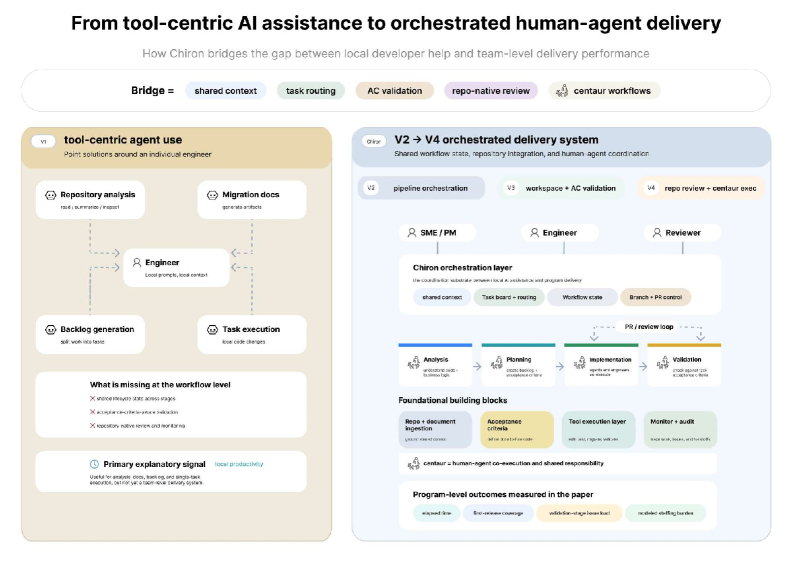
A rare longitudinal field study tracking real software modernization projects using human-AI collaboration across three major migrations. Shows concrete metrics: portfolio delivery time dropped from 36 project-weeks to 9.3, with modeled person-day savings of 73%. This provides actual evidence for AI productivity claims in enterprise software delivery, not just individual task benchmarks.

Takeaways
  • Real software modernization projects using human-AI collaboration reduced delivery time from 36 project-weeks to 9.3 with 73% person-day savings.
  • This provides concrete evidence for AI productivity claims in enterprise software delivery beyond individual task benchmarks.
  • Successful human-AI collaboration in software delivery requires orchestrated workflows, not just individual AI tool adoption.
from Mar 23, 2026 · via api-arxiv · arXiv:2603.20028
Ask HN: AI productivity gains – do you fire devs or build better products?
Accessible

Ask HN: AI productivity gains – do you fire devs or build better products?

Bleiglanz

A candid Hacker News discussion on the real productivity impacts of AI coding tools, moving beyond hype to practical experience. The author reports massive gains for boilerplate, libraries, and refactoring work while questioning long-term claims for complex enterprise systems. Valuable for understanding the actual developer experience and managing realistic expectations about AI-assisted development.

Takeaways
  • AI coding tools show massive productivity gains for boilerplate, libraries, and refactoring work but mixed results for complex enterprise systems.
  • Managing realistic expectations about AI-assisted development requires understanding the gap between hype and practical developer experience.
  • Teams should focus AI adoption on well-defined, repetitive coding tasks rather than complex architectural decisions.
from Mar 23, 2026 · via api-hn