LLM News Digest

Agents Mature, Security Questions Mount

March 29, 2026 · 12 papers

This week showcases the growing sophistication of AI agents with Anthropic's auto-mode for Claude and practical frameworks like Pi, while highlighting emerging security concerns from GitHub's training policy changes to LLM-based deanonymization attacks. Meanwhile, practical engineering advances in quantization and model streaming suggest production AI is becoming more accessible, though several pieces warn against rushing AI adoption without considering long-term maintainability costs.

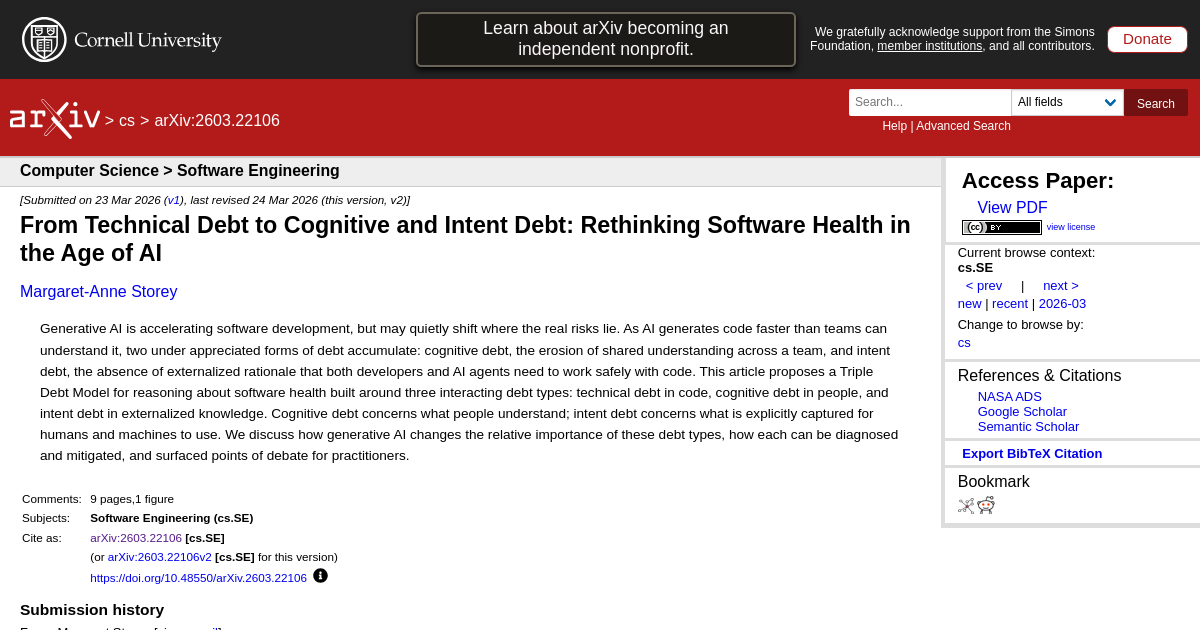
From Technical Debt to Cognitive and Intent Debt: Rethinking Software Health in the Age of AI
Intermediate

From Technical Debt to Cognitive and Intent Debt: Rethinking Software Health in the Age of AI

As AI generates code faster than teams can understand it, traditional technical debt isn't the only concern — cognitive debt (team understanding erosion) and intent debt (missing rationale for decisions) become critical risks. This framework challenges teams to think beyond code quality and consider how AI affects shared understanding and knowledge capture. Essential reading for engineering leaders navigating the balance between AI velocity and long-term maintainability.

Takeaways
  • AI-generated code creates new forms of debt beyond traditional technical debt that can silently undermine team effectiveness.
  • Cognitive debt occurs when team understanding erodes faster than code accumulates, making future changes increasingly risky.
  • Intent debt — the absence of captured rationale — becomes critical when both humans and AI agents need to work safely with existing code.
via manual
Pi: The Minimal Agent Within OpenClaw
Intermediate

Pi: The Minimal Agent Within OpenClaw

Pi represents a minimalist approach to coding agents that focuses on doing fewer things extremely well rather than trying to be a general-purpose assistant. The author argues this constraint-driven design offers a glimpse into how production coding agents should be built — with clear boundaries and specific capabilities rather than attempting to solve every development task.

Takeaways
  • Minimalist agent design with clear constraints may be more effective than general-purpose coding assistants.
  • Focused agents that excel at specific tasks could be the future of AI-assisted development workflows.
via manual
Temporal Straightening for Latent Planning
Advanced

Temporal Straightening for Latent Planning

Researchers tackle the challenge of learning better representations for AI planning by introducing 'temporal straightening' — essentially making latent space trajectories less curved to improve planning stability. While technically sophisticated, this is foundational ML research focused on world models and gradient-based planning that doesn't directly translate to current LLM engineering practices.

Takeaways
  • Reducing curvature in latent trajectories makes Euclidean distance a better proxy for actual planning distance.
  • Better representations for planning require joint learning of encoders and predictors rather than using pretrained features.
via manual
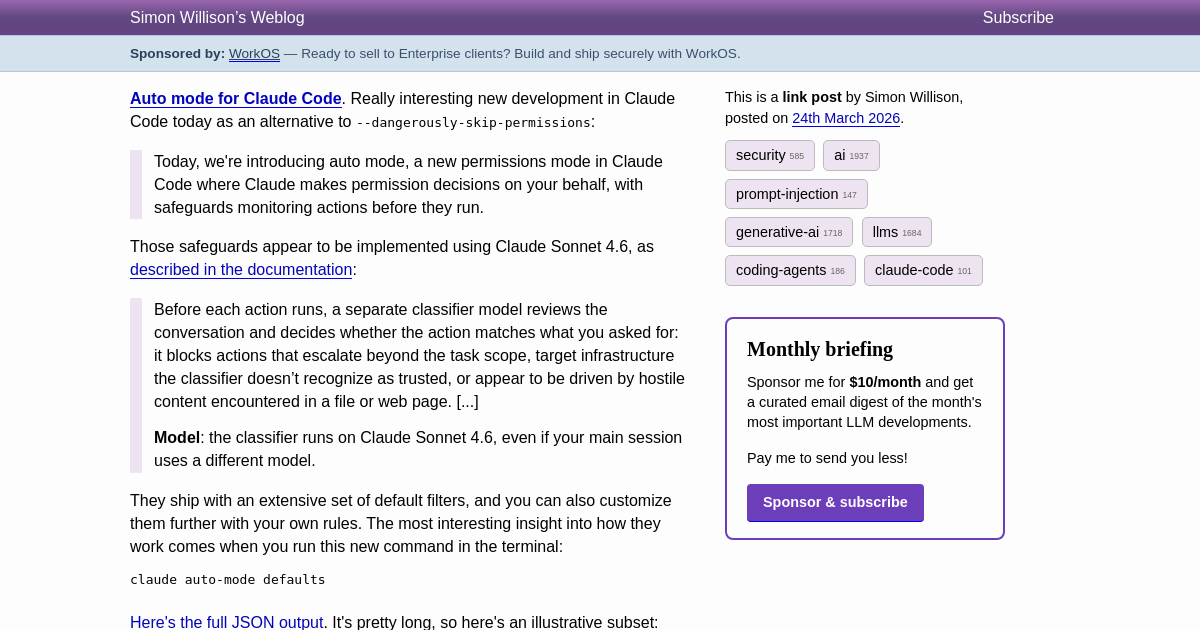
Auto mode for Claude Code
Intermediate

Auto mode for Claude Code

Anthropic introduces 'auto mode' for Claude Code that lets the AI make permission decisions autonomously, with a separate Claude model acting as a safety classifier before each action executes. This represents a sophisticated approach to the fundamental challenge of autonomous agents — how to give them freedom to act while maintaining safety guardrails through multi-model oversight.

Takeaways
  • Multi-model safety architectures can enable more autonomous agent behavior by having one model review another's planned actions.
  • Permission management in AI agents is evolving from binary allow/deny to context-aware decision making with built-in safeguards.
via rss-willison
Introducing the OpenAI Safety Bug Bounty program
Intermediate

Introducing the OpenAI Safety Bug Bounty program

OpenAI's new bug bounty program specifically targets AI safety issues including prompt injection, agentic vulnerabilities, and data exfiltration — signaling that these attack vectors are now mainstream security concerns. For production teams, this validates that AI-specific security testing should be part of standard security practices, not an afterthought.

Takeaways
  • AI-specific vulnerabilities like prompt injection and agentic exploits are now recognized as legitimate security concerns requiring dedicated testing.
  • Production AI systems need security models that account for both traditional software vulnerabilities and novel AI attack vectors.
via rss-openai
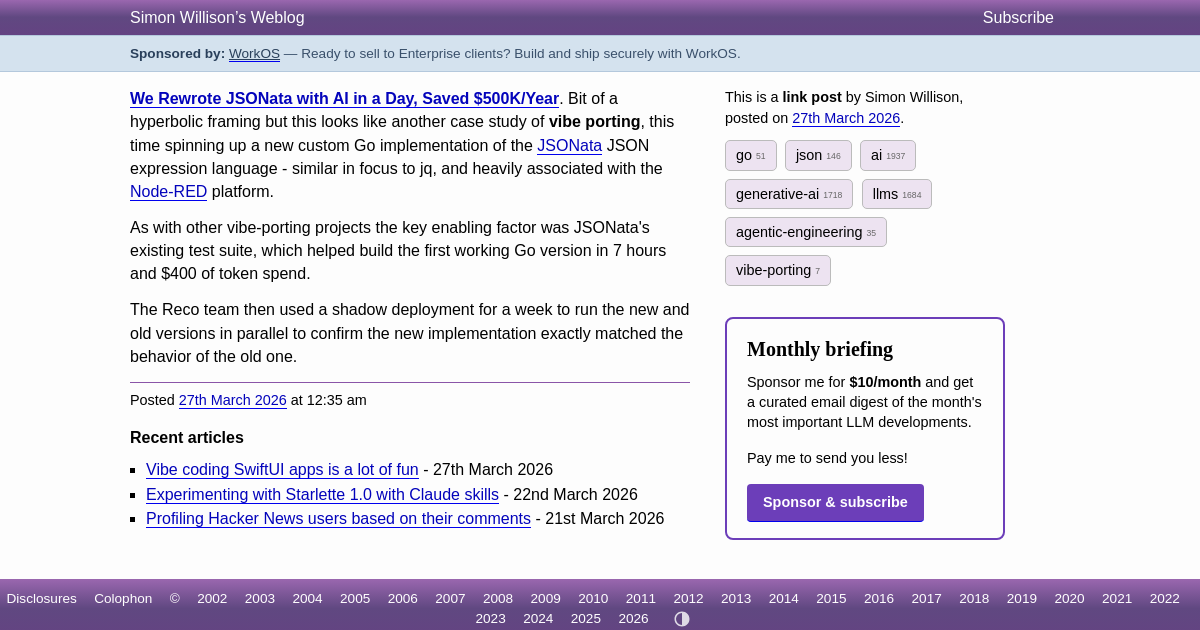
We Rewrote JSONata with AI in a Day, Saved $500K/Year
Intermediate

We Rewrote JSONata with AI in a Day, Saved $500K/Year

A compelling case study of 'vibe porting' — using AI to rewrite JSONata in Go guided by the existing test suite, achieving significant cost savings in just 7 hours and $400 of API costs. This demonstrates a practical methodology for AI-assisted rewrites: leverage comprehensive tests as guardrails and let AI handle the mechanical translation work.

Takeaways
  • Comprehensive test suites enable reliable AI-powered porting between languages with minimal human oversight.
  • Vibe porting can deliver substantial business value ($500K annual savings) when applied to performance-critical components.
  • The methodology scales: 7 hours of AI-assisted development replaced what would have been months of manual rewriting.
via rss-willison
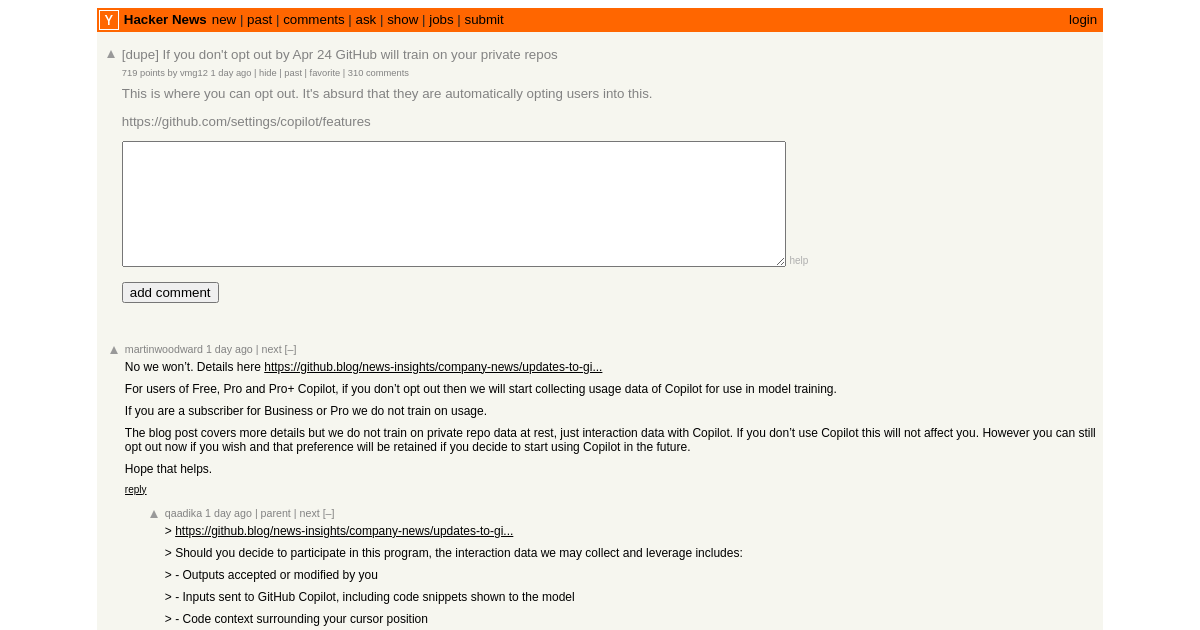
If you don't opt out by Apr 24 GitHub will train on your private repos
Accessible

If you don't opt out by Apr 24 GitHub will train on your private repos

vmg12

GitHub is automatically opting users into training Copilot on private repositories unless they explicitly opt out by April 24th — a significant policy change that could expose proprietary code to AI training. This represents a major shift in how code hosting platforms treat private repositories and requires immediate action from teams concerned about code privacy.

Takeaways
  • GitHub's default opt-in policy for private repo training changes the privacy expectations for enterprise code.
  • Teams need to audit their GitHub settings immediately to prevent proprietary code from entering AI training datasets.
719 points on HN · via api-hn
Thoughts on slowing the fuck down
Intermediate

Thoughts on slowing the fuck down

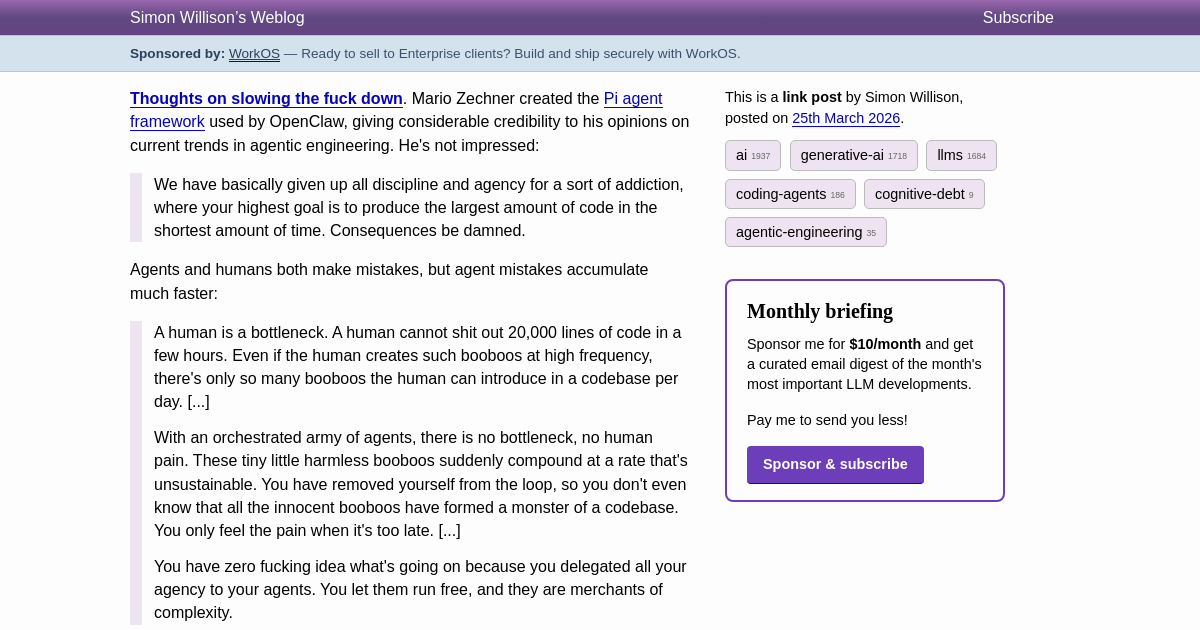
The creator of Pi agent framework delivers a sharp critique of current AI-assisted development practices, arguing that the rush to generate code quickly is eroding engineering discipline and creating unsustainable technical debt. His core thesis: agent mistakes accumulate faster than human mistakes, making the 'move fast' approach particularly dangerous in AI-assisted development.

Takeaways
  • AI agents can generate technical debt faster than human developers, requiring new approaches to code quality control.
  • The velocity benefits of AI coding tools may come at the cost of long-term code maintainability and team understanding.
  • Engineering teams need intentional practices to maintain discipline when AI makes rapid development so tempting.
via rss-willison
Large-scale online deanonymization with LLMs
Intermediate

Large-scale online deanonymization with LLMs

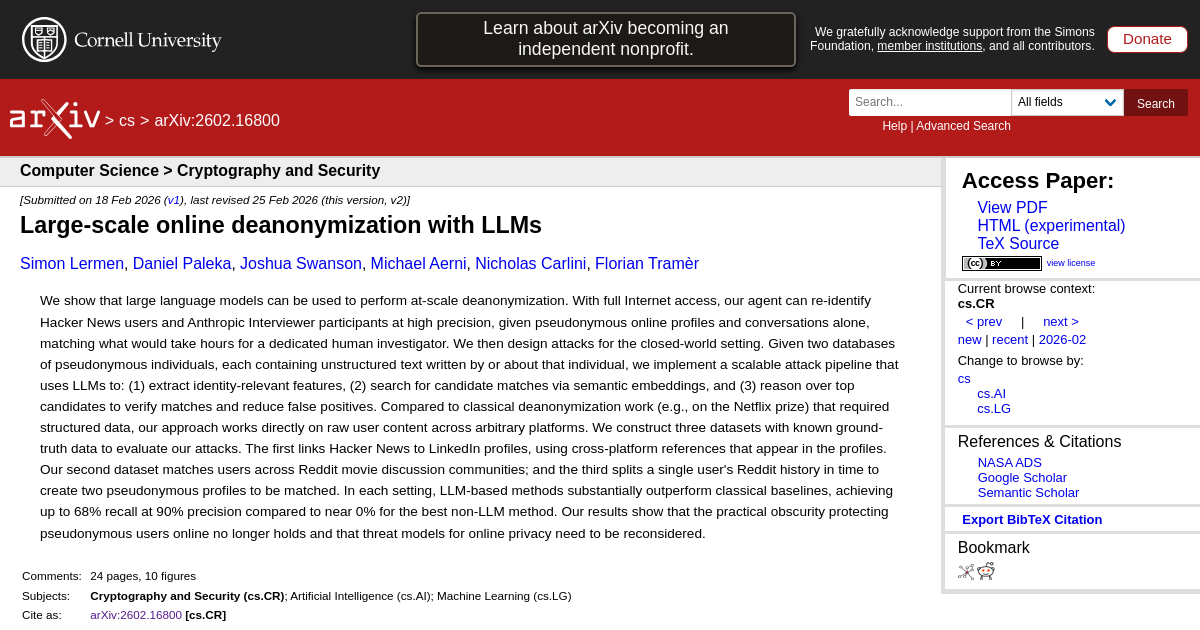
Research demonstrates how LLMs can be used to deanonymize users at scale, representing a significant privacy threat that production teams need to understand. This work highlights how the pattern-matching capabilities that make LLMs useful for many tasks also make them powerful tools for breaking anonymization schemes.

Takeaways
  • LLMs' pattern recognition capabilities can break traditional anonymization techniques at scale.
  • Production systems handling user data need to consider LLM-based deanonymization as a threat vector in their privacy models.
15 points on Lobsters · via api-lobsters
Quantization from the ground up
Intermediate

Quantization from the ground up

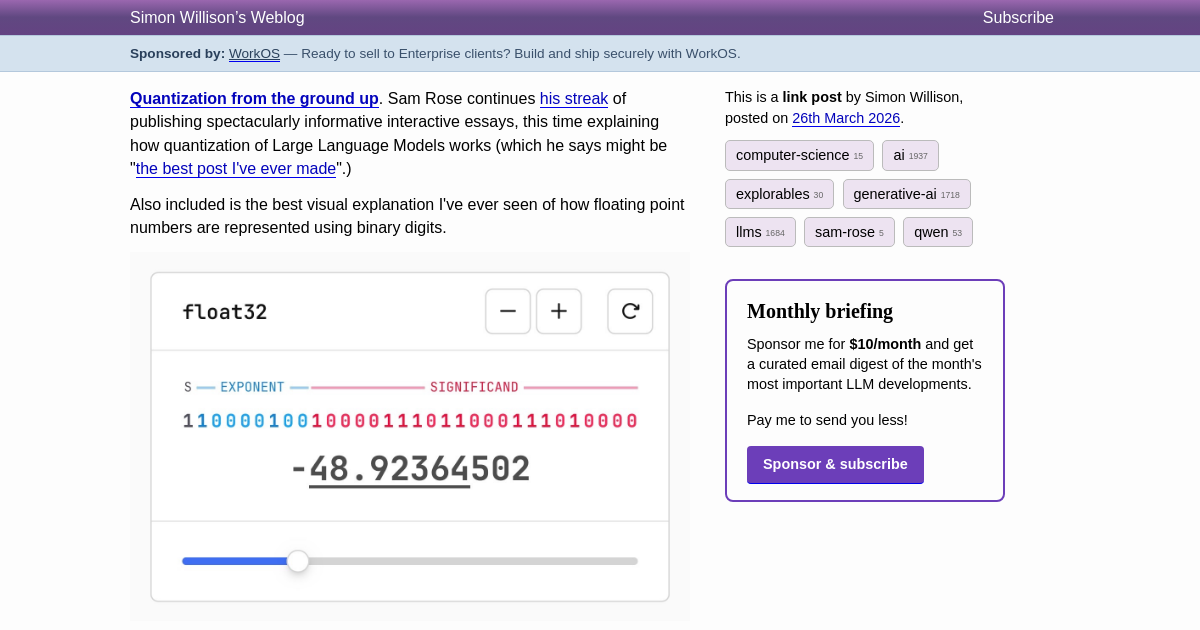
An exceptional interactive guide to quantization that explains how to compress LLMs for production deployment, including the crucial concept of outlier values that can break naive quantization schemes. Essential reading for engineers deploying models in resource-constrained environments who need to understand the tradeoffs between model size and accuracy.

Takeaways
  • Quantization requires handling outlier values specially to maintain model quality — naive approaches often fail.
  • Understanding floating point representation is crucial for effective model compression in production systems.
  • Interactive visualizations make complex quantization concepts accessible to practitioners who need to optimize deployed models.
via rss-willison
Streaming experts
Intermediate

Streaming experts

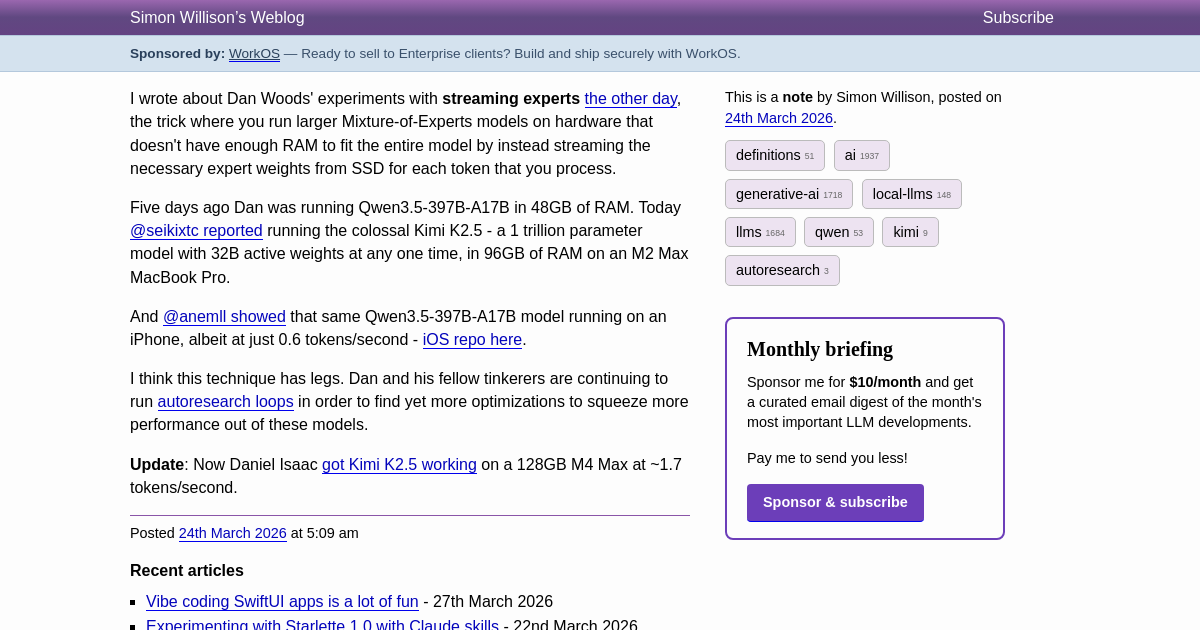
Breakthrough technique allows running massive Mixture-of-Experts models (up to 1 trillion parameters) on consumer hardware by streaming only the necessary expert weights from SSD for each token. This could democratize access to state-of-the-art models for teams without enterprise-scale infrastructure, though with latency tradeoffs.

Takeaways
  • Streaming expert weights from SSD enables running models 10x larger than available RAM would normally allow.
  • The technique makes trillion-parameter models accessible on consumer hardware, potentially changing deployment economics.
via rss-willison
Show HN: Robust LLM extractor for websites in TypeScript
Intermediate

Show HN: Robust LLM extractor for websites in TypeScript

andrew_zhong

A practical TypeScript library that solves the common problem of extracting structured data from websites using LLMs, addressing real pain points like HTML noise, token budget management, and brittleness of traditional CSS selectors. This represents the kind of focused tooling that makes AI-powered data extraction reliable enough for production use.

Takeaways
  • LLM-based extraction needs preprocessing to remove HTML noise and stay within token budgets for reliable results.
  • Focused tools that solve specific AI integration problems are more valuable than general-purpose solutions for production teams.
  • AI extraction can replace brittle CSS selectors but requires thoughtful engineering to handle edge cases and failures.
72 points on HN · via api-hn