LLM News Digest

Tag: opinion

Not so locked in any more
Accessible

Not so locked in any more

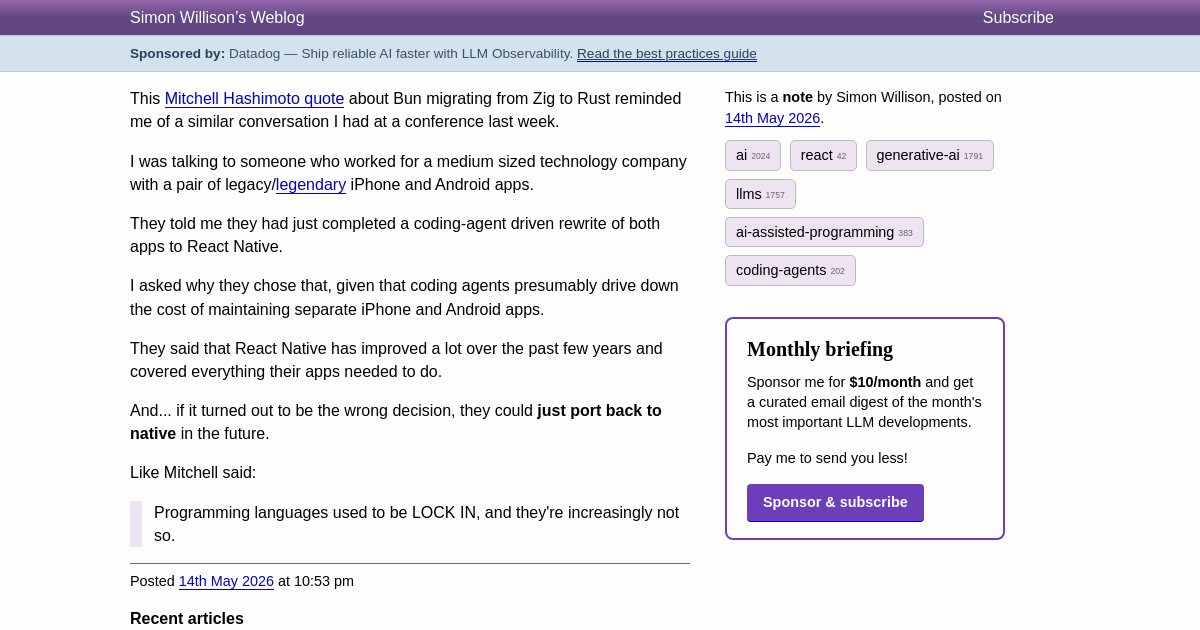
This captures a profound shift in software engineering economics—AI coding agents are eliminating traditional language and platform lock-in by making rewrites economically feasible. The example of a company using coding agents to migrate legacy iPhone/Android apps to React Native illustrates how AI changes the cost-benefit calculus of maintaining separate codebases. This has massive implications for technology choices and technical debt management.

Takeaways
  • AI coding agents are reducing the economic barriers to cross-platform migrations and rewrites.
  • Traditional platform lock-in becomes less relevant when AI can handle the tedious work of code translation.
  • Strategic technology decisions need to account for dramatically lower migration costs in an AI-augmented world.
from May 18, 2026 · via rss-willison
Why senior developers fail to communicate their expertise
Accessible

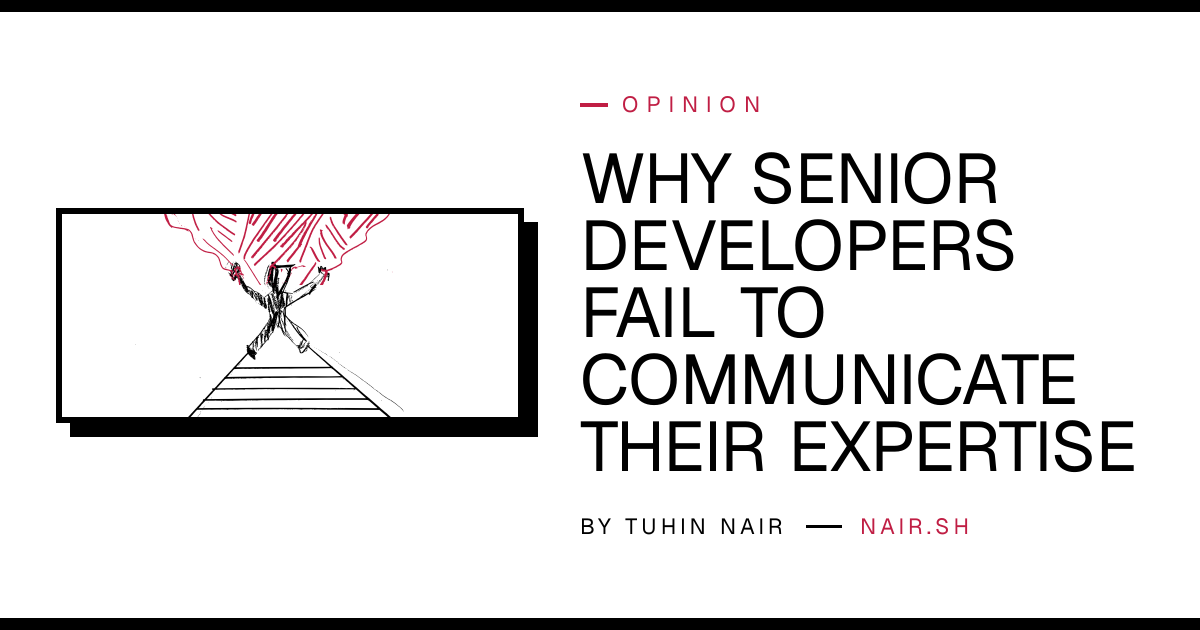
Why senior developers fail to communicate their expertise

This challenges the conventional wisdom that technical expertise alone makes senior developers valuable in the AI era. The author argues that senior developers instinctively focus on technical complexity while business stakeholders worry about uncertainty—a communication gap that becomes critical when AI can handle much of the complexity but amplifies the uncertainty. If you're a senior engineer wondering how to stay relevant, this reframes the conversation entirely.

Takeaways
  • Senior developers must shift from communicating complexity to addressing business uncertainty in AI-augmented workflows.
  • Traditional technical communication patterns become counterproductive when AI handles routine complexity.
  • The most valuable senior developers will be those who can translate between AI capabilities and business outcomes.
from May 18, 2026 · via manual
Mathematical methods and human thought in the age of AI
Advanced

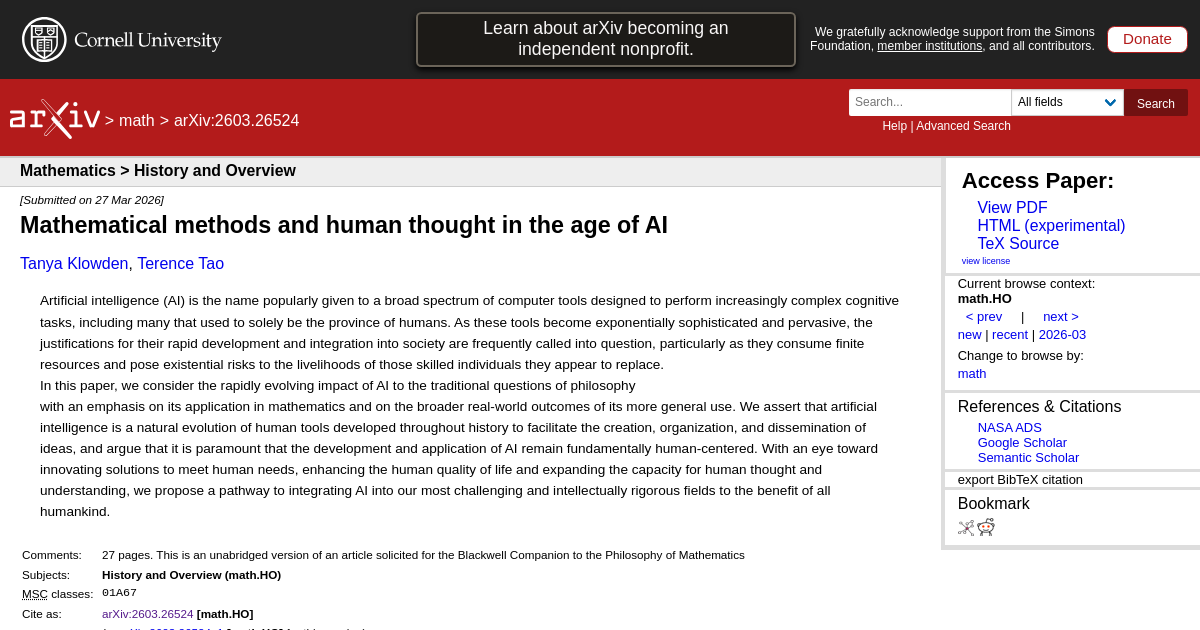
Mathematical methods and human thought in the age of AI

A thoughtful philosophical examination of AI's role as an evolution of human intellectual tools rather than a replacement for human thought. This matters to practitioners because it provides a framework for thinking about AI's place in mathematical and engineering work—not as competition, but as the latest in a long line of tools that extend human cognitive capabilities. Particularly relevant for engineers grappling with existential questions about AI's impact on their profession.

Takeaways
  • AI represents a natural evolution of human intellectual tools, not a fundamental departure from historical patterns.
  • The philosophical framework helps engineers understand AI's role in augmenting rather than replacing human reasoning.
  • Understanding AI as a tool for organizing and disseminating ideas provides clarity on its proper application in technical work.
from May 18, 2026 · via manual · arXiv:2603.26524
Agentic AI Systems Should Be Designed as Marginal Token Allocators
Intermediate

Agentic AI Systems Should Be Designed as Marginal Token Allocators

Siqi Zhu

Essential reading if you're building agentic systems—this paper reframes agent design through economic principles, showing how routing, planning, serving, and training decisions all solve the same optimization problem: marginal benefit equals marginal cost plus latency plus risk. Instead of thinking about agents as text generators, this framework treats them as token allocation economies, explaining why locally optimal decisions often lead to globally suboptimal performance.

Takeaways
  • All agent system layers (routing, planning, serving, training) solve the same economic optimization problem.
  • Local token minimization often leads to global misallocation of computational resources.
  • Agent performance should be evaluated through marginal token allocation efficiency rather than just accuracy metrics.
from May 11, 2026 · via api-hf · arXiv:2605.01214
Appearing Productive in The Workplace — No One
Accessible

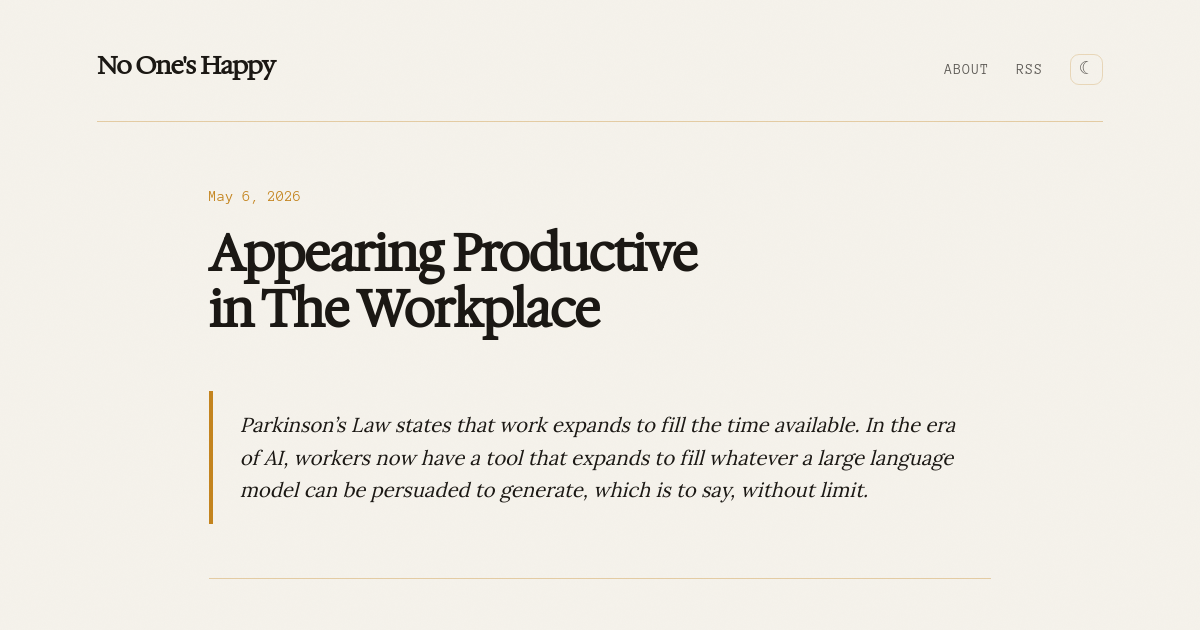
Appearing Productive in The Workplace — No One

This challenges the conventional wisdom that AI-generated code is obviously detectable by experienced engineers. The author argues that AI can now produce work that passes expert review while containing fundamental flaws that only surface later in production, creating two dangerous failure modes: code that looks professional but lacks deep understanding, and teams that become dependent on AI output they can't properly evaluate.

Takeaways
  • AI-generated work can fool experienced reviewers by appearing expert without actually being expert.
  • The failure modes are both immediate (bad code getting through) and systemic (teams losing evaluation skills).
  • Traditional code review processes may be insufficient for AI-assisted development.
from May 11, 2026 · via manual
Terence Tao (@tao@mathstodon.xyz)
Intermediate

Terence Tao (@tao@mathstodon.xyz)

Terence Tao identifies a critical gap in AI mathematical reasoning that applies directly to software engineering: while AI can generate and verify proofs (or code), it struggles with the third component—digestion or true understanding. This creates 'proof indigestion' where solutions are technically correct but lack the deeper comprehension needed for maintenance, debugging, or extension, a problem that simply training AI to write better explanations won't fully solve.

Takeaways
  • AI excels at generation and verification but fails at deep understanding and explanation.
  • Technical correctness doesn't guarantee maintainable or understandable solutions.
  • Simply automating explanation generation won't solve the fundamental comprehension gap.
from May 11, 2026 · via manual
Your CEO is suffering from AI psychosis
Accessible

Your CEO is suffering from AI psychosis

A pointed critique of executive-level AI hype that's driving unrealistic expectations and poor technical decisions in organizations. While the title is provocative, this addresses the real challenge engineers face when leadership makes AI commitments without understanding the technology's limitations, leading to impossible timelines and misallocated resources.

Takeaways
  • Executive AI enthusiasm often disconnects from technical reality and constraints.
  • Engineers need strategies for managing unrealistic AI expectations from leadership.
  • The hype cycle is creating organizational problems that technical teams must navigate.
from May 11, 2026 · via manual
The Last Human-Written Paper: Agent-Native Research Artifacts
Intermediate

The Last Human-Written Paper: Agent-Native Research Artifacts

Jiachen Liu, Jiaxin Pei, Jintao Huang, Chenglei Si, Ao Qu, Xiangru Tang, Runyu Lu, Lichang Chen, Xiaoyan Bai, Haizhong Zheng, Carl Chen, Zhiyang Chen, Haojie Ye, Yujuan Fu, Zexue He, Zijian Jin, Zhenyu Zhang, Shangquan Sun, Maestro Harmon, John Dianzhuo Wang, Jianqiao Zeng, Jiachen Sun, Mingyuan Wu, Baoyu Zhou, Chenyu You, Shijian Lu, Yiming Qiu, Fan Lai, Yuan Yuan, Yao Li, Junyuan Hong, Ruihao Zhu, Beidi Chen, Alex Pentland, Ang Chen, Mosharaf Chowdhury, Zechen Zhang

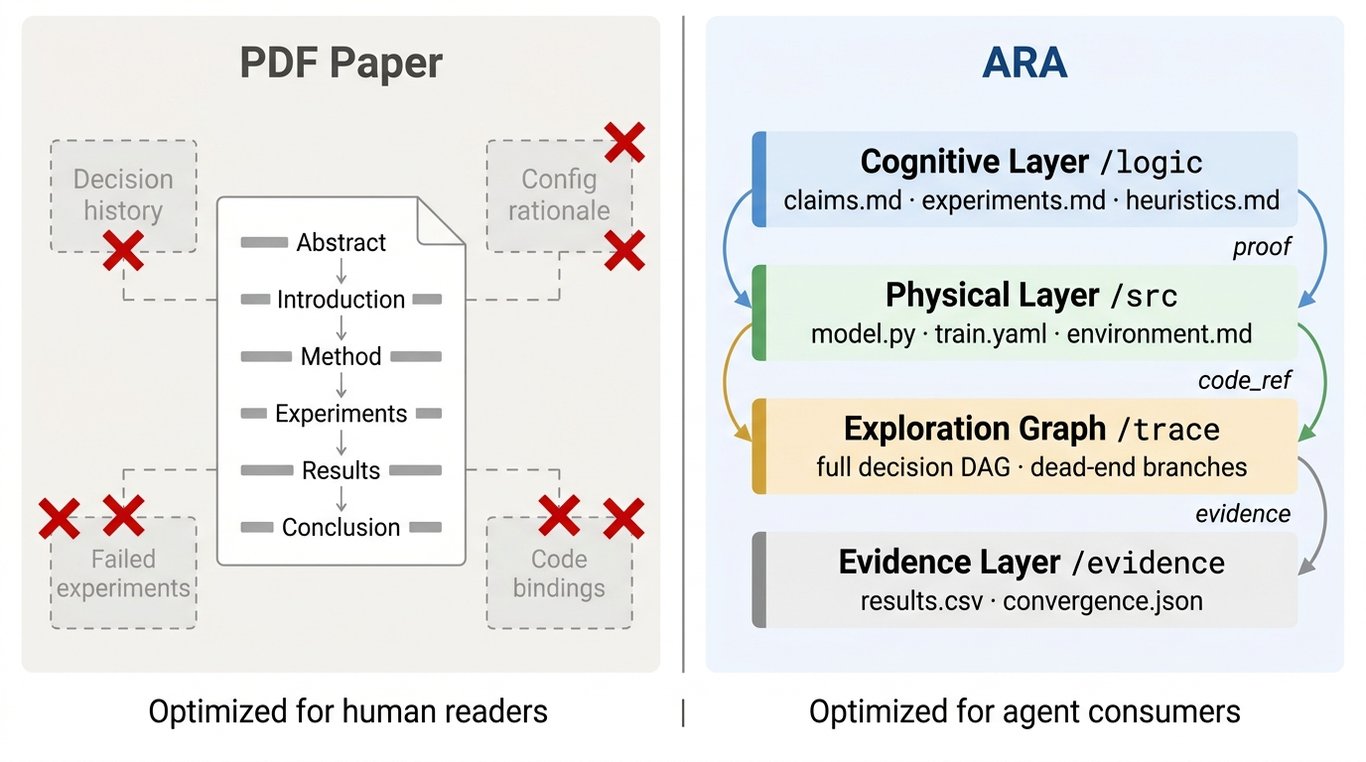
Proposes a radical reimagining of research artifacts as machine-executable packages that preserve the full exploration process, including failures and implementation details that traditional papers discard. For teams building AI agents that need to understand and extend existing work, this framework offers a path toward truly reproducible and agent-consumable research.

Takeaways
  • Traditional research papers impose storytelling and engineering taxes that make them unsuitable for AI agents to consume and extend.
  • Agent-native artifacts should preserve the full exploration graph including failed experiments and rejected hypotheses.
  • Machine-executable research packages can bridge the gap between human-readable findings and agent-actionable specifications.
from May 4, 2026 · via api-hf · arXiv:2604.24658
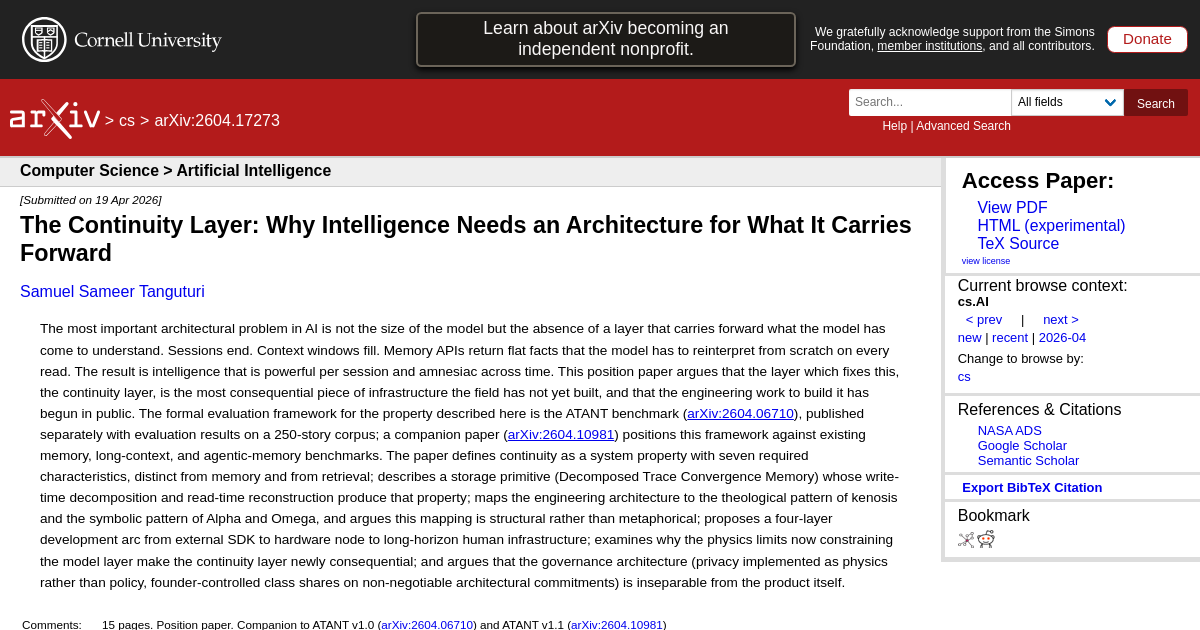
The Continuity Layer: Why Intelligence Needs an Architecture for What It Carries Forward
Accessible

The Continuity Layer: Why Intelligence Needs an Architecture for What It Carries Forward

Samuel Sameer Tanguturi

This position paper argues that the most critical missing piece in AI architecture is a 'continuity layer' that preserves what models learn across sessions, addressing the fundamental amnesia problem where powerful per-session intelligence is lost when contexts reset. The paper challenges the field's focus on model size over persistent understanding and outlines specific engineering requirements for systems that truly accumulate knowledge over time.

Takeaways
  • The absence of persistent memory across sessions is a more critical architectural problem than model size in current AI systems.
  • Current memory APIs return flat facts that models must reinterpret from scratch, creating powerful but amnesiac intelligence.
  • A continuity layer requires seven specific characteristics including persistent state, selective retention, and coherent knowledge integration.
from Apr 27, 2026 · via api-hf · arXiv:2604.17273
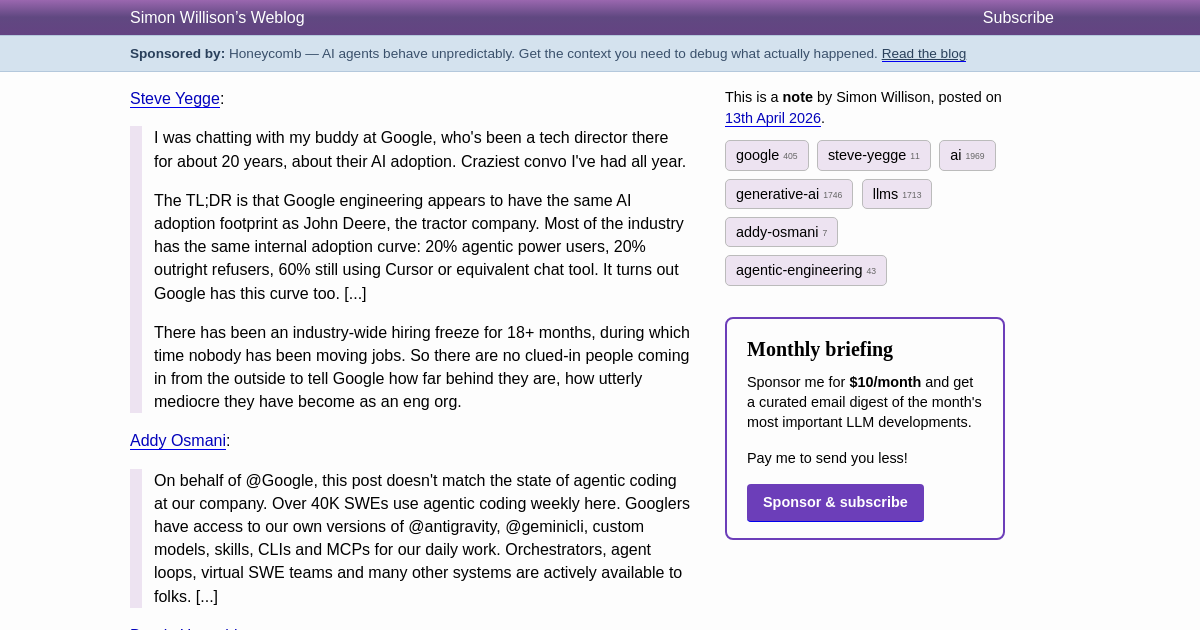
Steve Yegge
Accessible

Steve Yegge

Yegge's conversation reveals that even Google's engineering teams follow the same AI adoption pattern as traditional companies: 20% power users building with agents, 20% refusing AI tools entirely, and 60% stuck using basic chat interfaces like Cursor. This insight challenges assumptions about tech giants being ahead on internal AI adoption and suggests most organizations are at similar maturity levels regardless of their AI product offerings.

Takeaways
  • Google's internal AI adoption mirrors traditional companies despite their advanced AI research and products.
  • The industry-wide pattern shows 60% of engineers still using basic chat tools rather than advanced agentic workflows.
  • Having cutting-edge AI products doesn't necessarily translate to advanced internal adoption within engineering teams.
from Apr 20, 2026 · 0 citations · via rss-willison
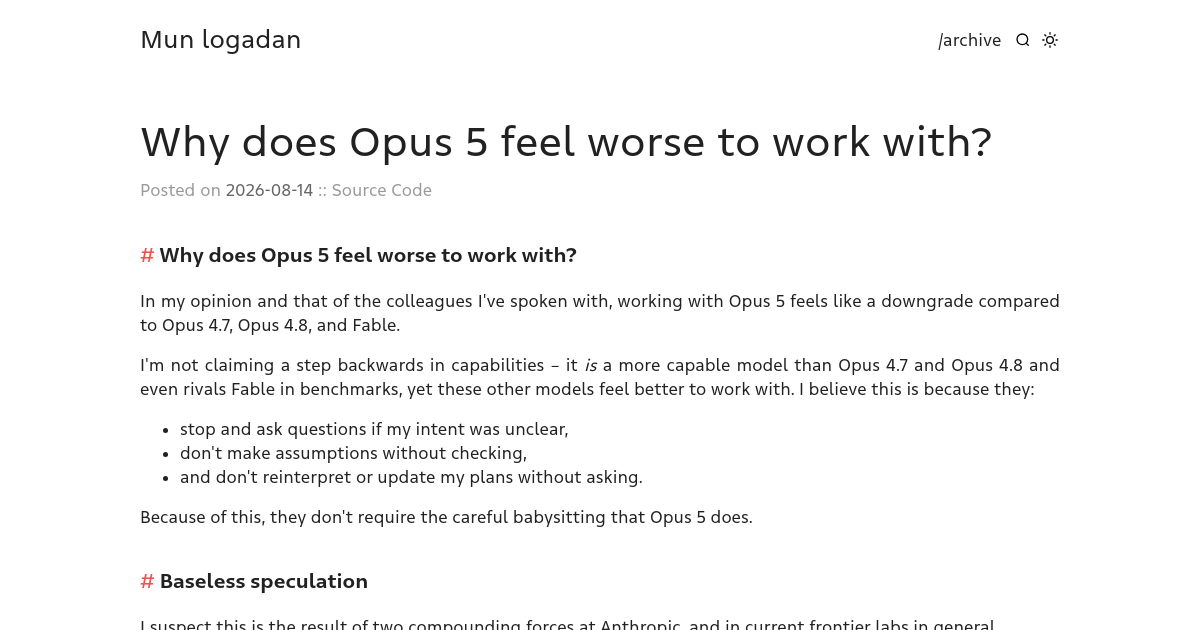
The Claude Coding Vibes Are Getting Worse
Accessible

The Claude Coding Vibes Are Getting Worse

A practitioner's firsthand account of Claude's coding capabilities deteriorating over recent months, with Opus 4.7 marking a particularly noticeable decline in code quality and user experience. This represents the kind of model drift that production teams using AI coding assistants need to monitor and plan for, as capabilities can regress without warning across model updates.

Takeaways
  • AI coding assistant capabilities can degrade over time through model updates, requiring continuous monitoring in production environments.
  • Recent Claude releases show measurable declines in coding quality according to experienced users.
  • Teams should plan for potential capability regressions when building dependencies on AI coding tools.
from Apr 20, 2026 · via manual
Anthropic's Project Glasswing - restricting Claude Mythos to security researchers - sounds necessary to me
Intermediate

Anthropic's Project Glasswing - restricting Claude Mythos to security researchers - sounds necessary to me

Anthropic took the unprecedented step of restricting access to Claude Mythos because its cybersecurity research capabilities are too powerful for general release—the model has already found thousands of high-severity vulnerabilities. This sets a crucial precedent for responsible AI deployment and signals that we're entering an era where model capabilities may outpace our ability to deploy them safely. Security-conscious engineering teams should pay close attention to how this restricted release model evolves.

Takeaways
  • AI capabilities in cybersecurity research have reached levels requiring restricted deployment to prevent misuse.
  • Anthropic's Mythos demonstrates that responsible AI release may require industry-wide coordination and preparation time.
  • The precedent of capability-based access restrictions signals a new phase in AI safety and deployment practices.
from Apr 13, 2026 · via rss-willison
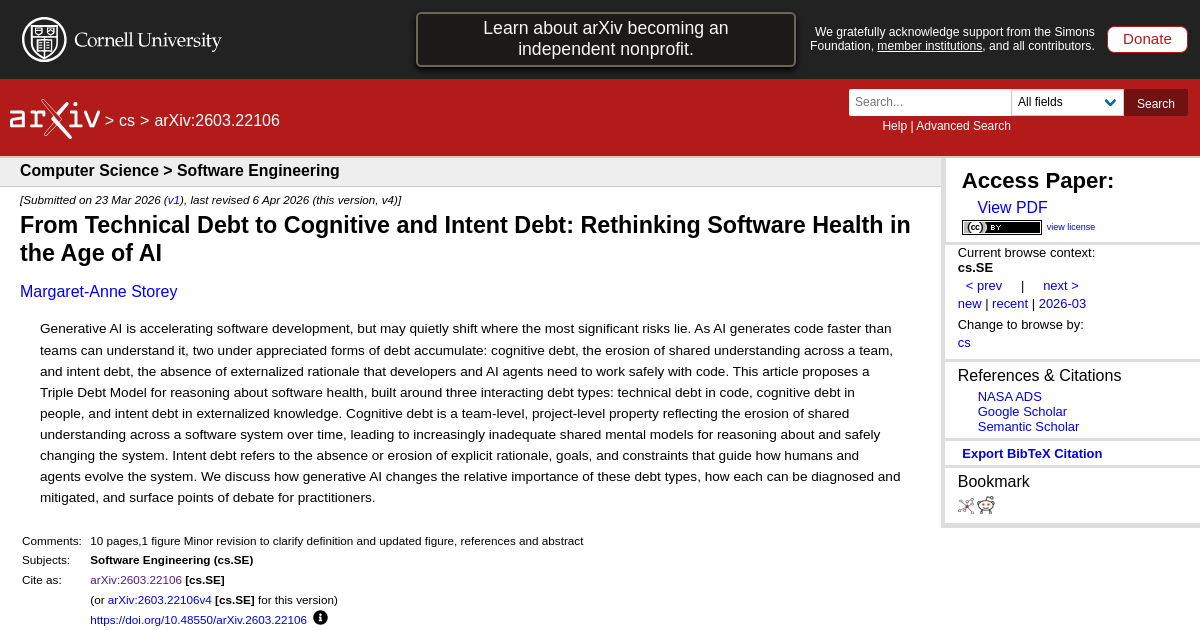
From Technical Debt to Cognitive and Intent Debt: Rethinking Software Health in the Age of AI
Accessible

From Technical Debt to Cognitive and Intent Debt: Rethinking Software Health in the Age of AI

As teams increasingly rely on AI to accelerate development, this framework warns that we're accumulating dangerous new forms of debt beyond just technical debt. Cognitive debt occurs when teams lose shared understanding of their systems as AI generates code faster than they can comprehend it, while intent debt refers to the missing documentation of why decisions were made—critical context that both humans and AI agents need to safely evolve code. This triple debt model provides a essential lens for evaluating software health in the AI era.

Takeaways
  • Cognitive debt erodes team understanding as AI generates code faster than teams can internalize it, creating dangerous knowledge gaps.
  • Intent debt—missing rationale and constraints—becomes critical when AI agents need explicit context to safely modify code.
  • Traditional technical debt metrics miss these human and knowledge-based risks that dominate in AI-assisted development.
from Apr 13, 2026 · via manual
Vulnerability Research Is Cooked
Intermediate

Vulnerability Research Is Cooked

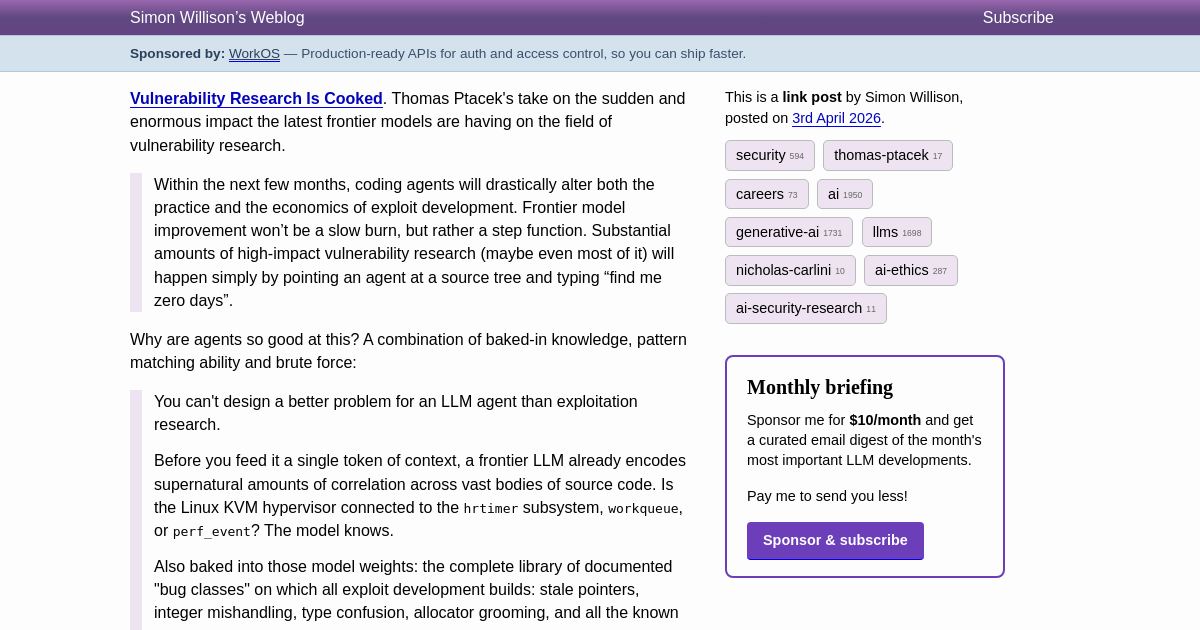
Thomas Ptacek's analysis of how frontier models are fundamentally disrupting vulnerability research, arguing that AI agents will soon automate most exploit development work. He predicts this won't be gradual improvement but a sudden step-function change that transforms both the economics and practice of security research. Essential reading for understanding how AI is reshaping cybersecurity beyond just coding assistance.

Takeaways
  • Frontier AI models will automate vulnerability discovery by systematically analyzing codebases at scale.
  • The transformation will be sudden rather than gradual, fundamentally altering security research economics.
  • Most high-impact vulnerability research may soon require only pointing agents at source code rather than manual analysis.
from Apr 6, 2026 · via rss-willison
Ask HN: Client took over development by vibe coding. What to do?
Accessible

Ask HN: Client took over development by vibe coding. What to do?

piscator

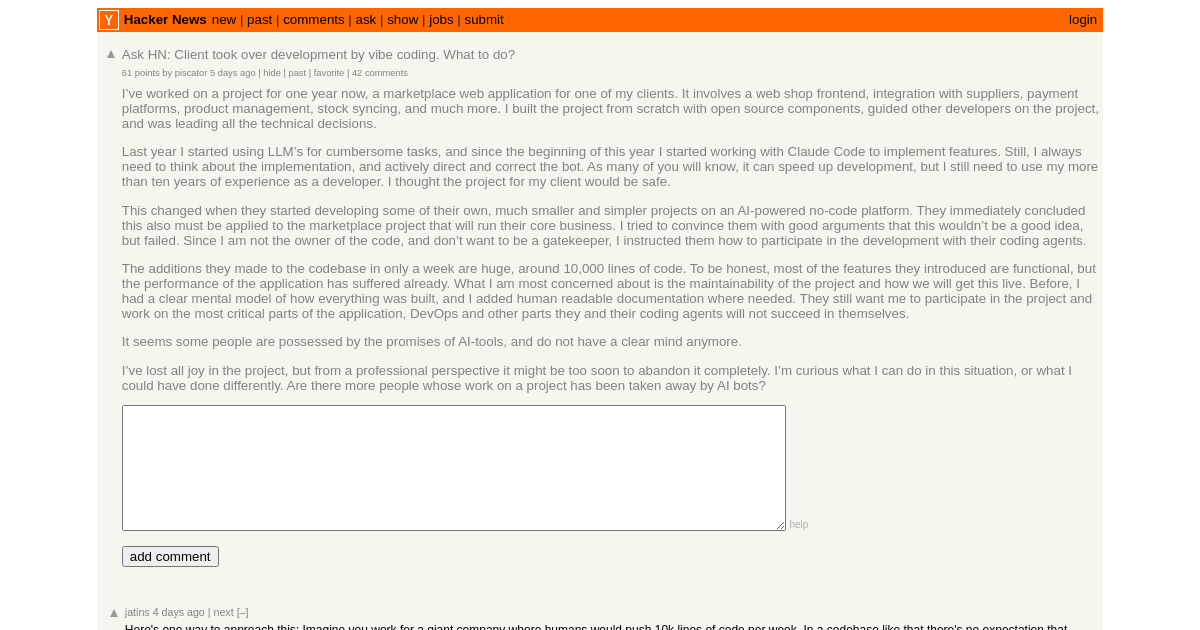
A developer's experience with a client who embraced "vibe coding" with Claude Code, making rapid changes without proper planning or architecture consideration. This highlights the tension between AI-enabled development speed and traditional software engineering discipline, raising important questions about maintaining code quality and project management when AI makes coding feel effortless.

Takeaways
  • AI coding tools can enable rapid development that bypasses important planning and architecture phases.
  • "Vibe coding" with AI can create technical debt and project management challenges despite apparent productivity gains.
  • Professional development workflows need to adapt to balance AI speed with engineering discipline.
from Apr 6, 2026 · 61 points on HN · via api-hn
Thoughts on slowing the fuck down
Intermediate

Thoughts on slowing the fuck down

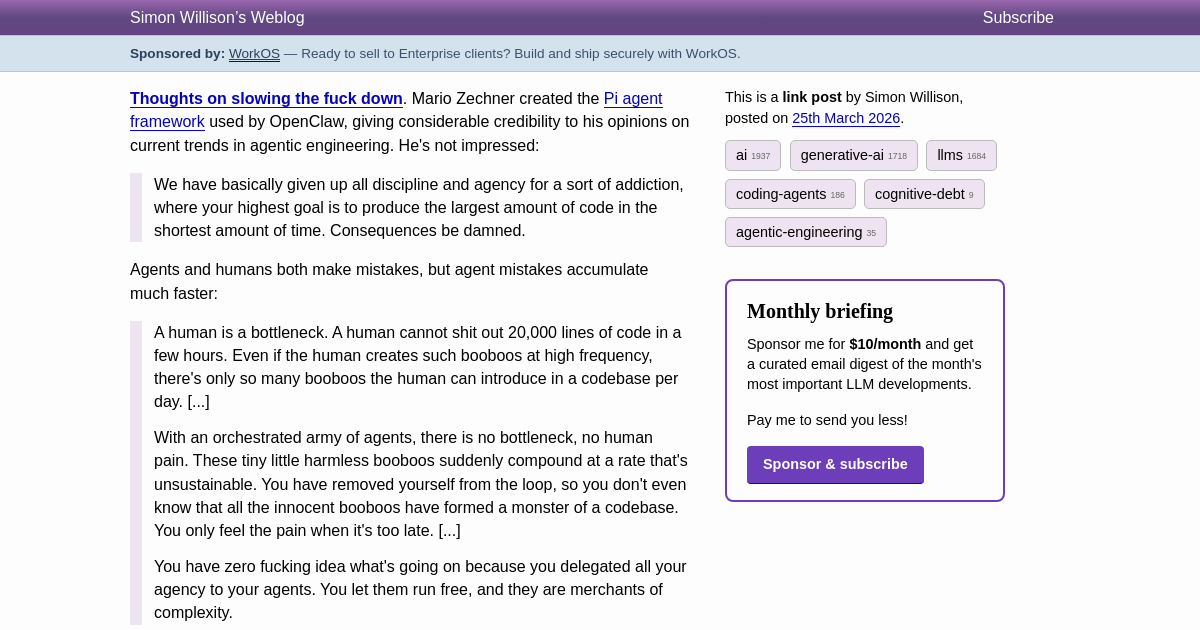
The creator of Pi agent framework delivers a sharp critique of current AI-assisted development practices, arguing that the rush to generate code quickly is eroding engineering discipline and creating unsustainable technical debt. His core thesis: agent mistakes accumulate faster than human mistakes, making the 'move fast' approach particularly dangerous in AI-assisted development.

Takeaways
  • AI agents can generate technical debt faster than human developers, requiring new approaches to code quality control.
  • The velocity benefits of AI coding tools may come at the cost of long-term code maintainability and team understanding.
  • Engineering teams need intentional practices to maintain discipline when AI makes rapid development so tempting.
from Mar 29, 2026 · via rss-willison
From Technical Debt to Cognitive and Intent Debt: Rethinking Software Health in the Age of AI
Intermediate

From Technical Debt to Cognitive and Intent Debt: Rethinking Software Health in the Age of AI

As AI generates code faster than teams can understand it, traditional technical debt isn't the only concern — cognitive debt (team understanding erosion) and intent debt (missing rationale for decisions) become critical risks. This framework challenges teams to think beyond code quality and consider how AI affects shared understanding and knowledge capture. Essential reading for engineering leaders navigating the balance between AI velocity and long-term maintainability.

Takeaways
  • AI-generated code creates new forms of debt beyond traditional technical debt that can silently undermine team effectiveness.
  • Cognitive debt occurs when team understanding erodes faster than code accumulates, making future changes increasingly risky.
  • Intent debt — the absence of captured rationale — becomes critical when both humans and AI agents need to work safely with existing code.
from Mar 29, 2026 · via manual
Ask HN: AI productivity gains – do you fire devs or build better products?
Accessible

Ask HN: AI productivity gains – do you fire devs or build better products?

Bleiglanz

A candid Hacker News discussion on the real productivity impacts of AI coding tools, moving beyond hype to practical experience. The author reports massive gains for boilerplate, libraries, and refactoring work while questioning long-term claims for complex enterprise systems. Valuable for understanding the actual developer experience and managing realistic expectations about AI-assisted development.

Takeaways
  • AI coding tools show massive productivity gains for boilerplate, libraries, and refactoring work but mixed results for complex enterprise systems.
  • Managing realistic expectations about AI-assisted development requires understanding the gap between hype and practical developer experience.
  • Teams should focus AI adoption on well-defined, repetitive coding tasks rather than complex architectural decisions.
from Mar 23, 2026 · via api-hn