LLM News Digest

Agents in Production, Architecture Rethinking Begins

April 27, 2026 · 12 papers

This week's edition focuses heavily on the engineering reality of deploying AI systems at scale, with Cloudflare sharing production metrics from 241 billion tokens and multiple studies revealing how coding agents actually perform in practice. We also see fundamental architectural questions emerging around agent safety, persistent memory, and moving beyond the limitations of current RAG and context-window approaches.

The AI engineering stack we built internally — on the platform we ship
Intermediate

The AI engineering stack we built internally — on the platform we ship

Cloudflare shares real metrics from running their own AI engineering stack in production, processing 241 billion tokens and serving 3,683 internal users. This is essential reading if you're building AI infrastructure — they dogfood their own products (AI Gateway, Workers AI) and provide actual numbers on throughput, costs, and architectural decisions. The post challenges the common wisdom of building separate dev/prod AI stacks by showing how running on your own platform reveals critical performance and scalability insights.

Takeaways
  • Running AI infrastructure on the same platform you ship reveals hidden performance bottlenecks and helps prioritize product improvements.
  • Processing 241 billion tokens across 20 million requests provides concrete scale benchmarks for AI Gateway architecture decisions.
  • Dogfooding AI products with thousands of internal users uncovers real-world usage patterns that synthetic benchmarks miss.
via manual
Quo Vadis, Code Review? Exploring the Future of Code Review
Intermediate

Quo Vadis, Code Review? Exploring the Future of Code Review

A survey of 100 developers across five companies reveals how AI automation is reshaping code review practices while the fundamentals remain essential. The research shows that practitioners expect code review to stay critical but anticipate significant changes in what gets reviewed and how much time it takes. This matters because understanding these trends helps teams adapt their review processes and tooling investments as AI-assisted development becomes mainstream.

Takeaways
  • Developers expect code review to remain essential despite increasing AI automation in development workflows.
  • The scope and time investment in code review are expected to shift significantly over the next five years as AI tools mature.
  • Teams need to proactively adapt review processes and tooling strategies to work effectively with AI-assisted development.
via manual · arXiv:2508.06879
Benchmarking Ollama vs LM Studio vs MLX
Intermediate

Benchmarking Ollama vs LM Studio vs MLX

A hands-on performance comparison of three popular local LLM inference tools (Ollama, LM Studio, MLX) that investigates why one tool felt laggy in practice. If you're choosing between local inference options or debugging performance issues with self-hosted models, this benchmarking approach shows how to systematically evaluate tools beyond just theoretical specs.

Takeaways
  • Perceived performance issues with local LLM tools require systematic benchmarking beyond just checking specs on paper.
  • The three major local inference platforms (Ollama, LM Studio, MLX) have measurable differences that affect real-world usage.
  • Proper benchmarking methodology for LLM inference tools should account for both throughput and latency characteristics.
via manual
Symbolic Guardrails for Domain-Specific Agents: Stronger Safety and Security Guarantees Without Sacrificing Utility
Intermediate

Symbolic Guardrails for Domain-Specific Agents: Stronger Safety and Security Guarantees Without Sacrificing Utility

Yining Hong, Yining She, Eunsuk Kang, Christopher S. Timperley, Christian Kästner

This research addresses a critical gap in AI agent security by introducing symbolic guardrails that provide formal guarantees against harmful actions, unlike neural approaches that only improve reliability. The paper reveals that 85% of agent safety benchmarks lack concrete policies, making this framework essential for anyone deploying agents in high-stakes business environments where privacy breaches or financial losses are unacceptable.

Takeaways
  • Symbolic guardrails can provide formal safety guarantees for AI agents, unlike training-based methods that only improve reliability.
  • 85% of current agent safety benchmarks lack concrete policies, relying instead on vague high-level goals or common sense.
  • 74% of well-specified policy requirements can be guaranteed through symbolic guardrails without sacrificing agent utility.
via api-hf · arXiv:2604.15579
WebCompass: Towards Multimodal Web Coding Evaluation for Code Language Models
Intermediate

WebCompass: Towards Multimodal Web Coding Evaluation for Code Language Models

Xinping Lei, Xinyu Che, Junqi Xiong, Chenchen Zhang, Yukai Huang, Chenyu Zhou, Haoyang Huang, Minghao Liu, Letian Zhu, Hongyi Ye, Jinhua Hao, Ken Deng, Zizheng Zhan, Han Li, Dailin Li, Yifan Yao, Ming Sun, Zhaoxiang Zhang, Jiaheng Liu

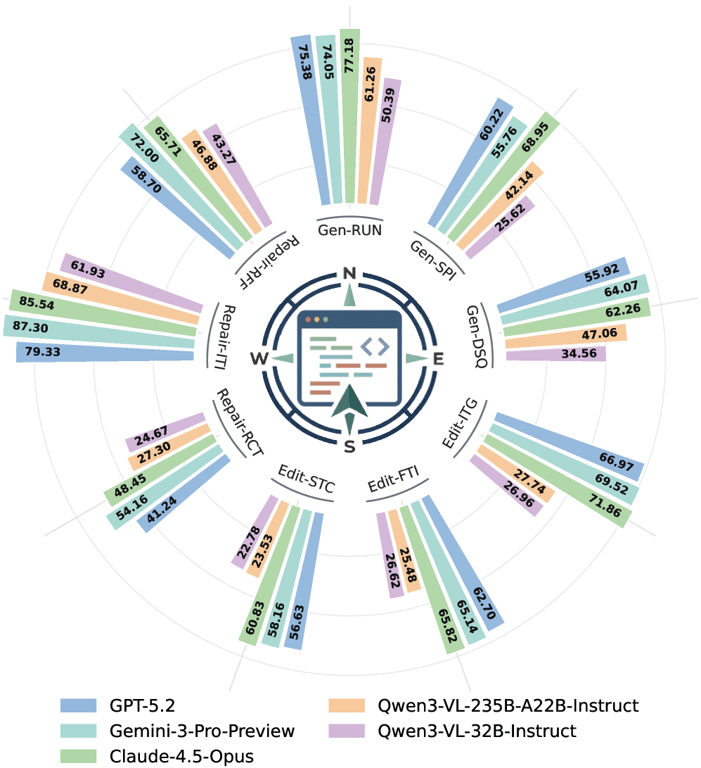
WebCompass introduces the first comprehensive benchmark for evaluating code language models on real web development workflows, spanning text, image, and video inputs across generation, editing, and repair tasks. This matters because existing benchmarks only test narrow slices of coding capability while missing visual fidelity and interaction quality — critical gaps if you're building or evaluating AI coding tools for web development.

Takeaways
  • Current coding benchmarks fail to capture the full lifecycle of web development, missing visual fidelity and interaction quality.
  • Real-world web coding requires multimodal understanding across text, image, and video inputs in iterative generation-editing-repair cycles.
  • LLM-as-a-judge evaluation with checklist guidance provides a practical methodology for assessing complex web development outputs.
via api-hf · arXiv:2604.18224
AgentSPEX: An Agent SPecification and EXecution Language
Intermediate

AgentSPEX: An Agent SPecification and EXecution Language

Pengcheng Wang, Jerry Huang, Jiarui Yao, Rui Pan, Peizhi Niu, Yaowenqi Liu, Ruida Wang, Renhao Lu, Yuwei Guo, Tong Zhang

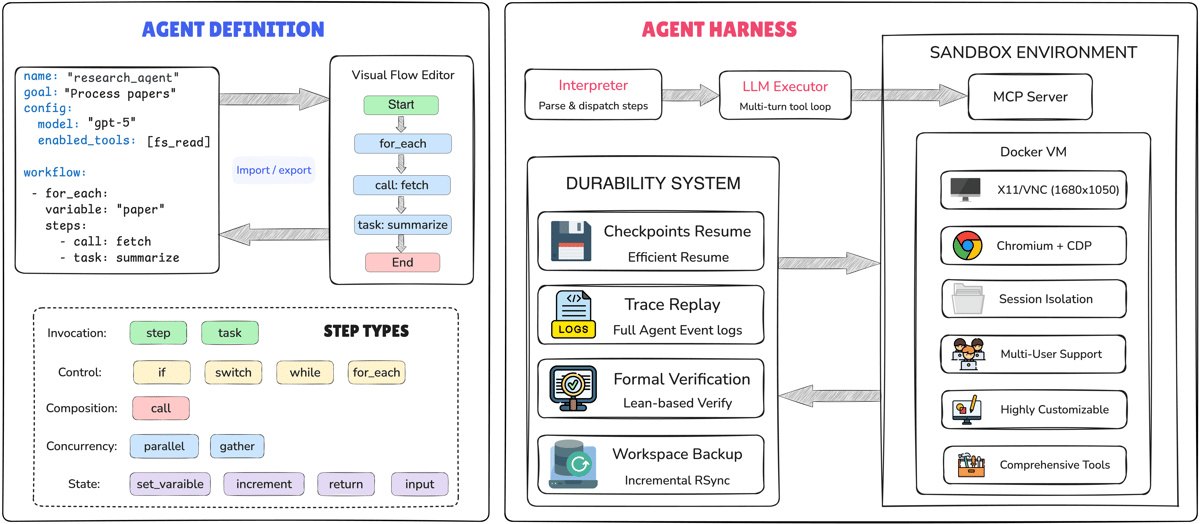
AgentSPEX introduces a declarative language for specifying LLM agent workflows with explicit control flow, addressing the maintainability nightmare of workflow logic tightly coupled to Python code in current frameworks like LangGraph and CrewAI. This matters because reactive prompting makes agent behavior unpredictable, while existing orchestration frameworks create maintenance headaches as workflows grow complex.

Takeaways
  • Current agent frameworks tightly couple workflow logic with Python code, making agents difficult to maintain as they grow complex.
  • Explicit control flow with typed steps, branching, and state management provides better structure than reactive prompting approaches.
  • Separating workflow specification from execution environment enables better tooling, verification, and collaborative development of agent systems.
via api-hf · arXiv:2604.13346
SWE-chat: Coding Agent Interactions From Real Users in the Wild
Accessible

SWE-chat: Coding Agent Interactions From Real Users in the Wild

Joachim Baumann, Vishakh Padmakumar, Xiang Li, John Yang, Diyi Yang, Sanmi Koyejo

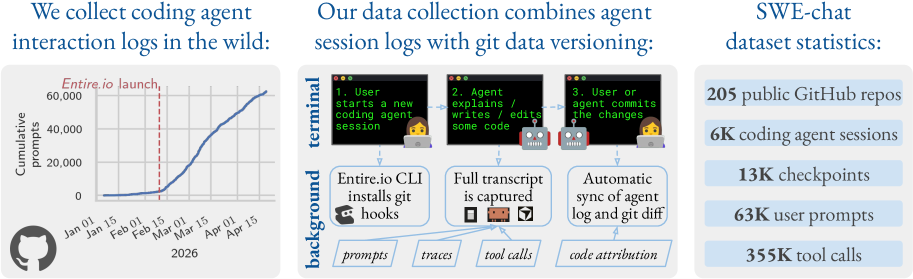
SWE-chat provides the first large-scale empirical evidence of how developers actually use AI coding agents in the wild, revealing that usage patterns are bimodal and agents are surprisingly inefficient. The dataset shows that only 44% of agent-produced code makes it into user commits, challenging the narrative of coding agent effectiveness and providing crucial insights for anyone building or deploying these tools in production.

Takeaways
  • Real-world coding patterns are bimodal: 41% of sessions involve agents writing virtually all code, while 23% have humans writing everything themselves.
  • Despite improving capabilities, only 44% of agent-produced code survives into user commits, revealing significant inefficiency in natural settings.
  • The first large-scale dataset of real coding agent usage provides empirical evidence that challenges assumptions about agent effectiveness in production.
via api-hf · arXiv:2604.20779
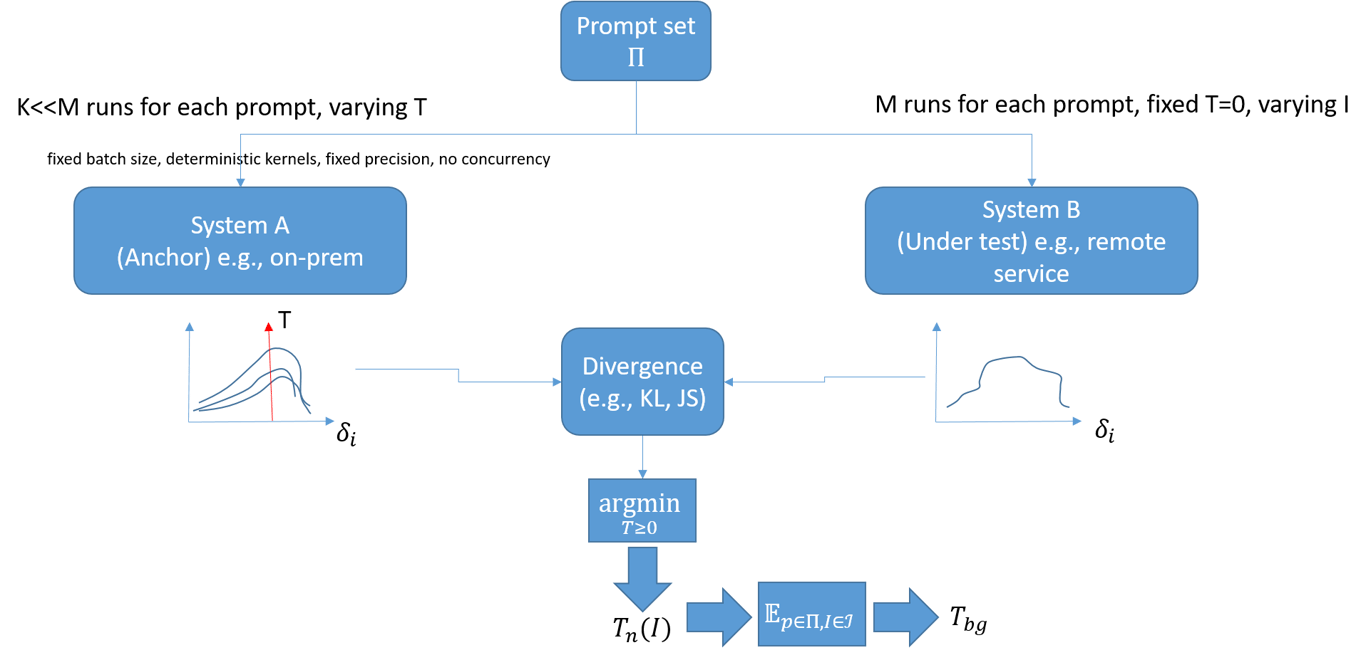
Introducing Background Temperature to Characterise Hidden Randomness in Large Language Models
Intermediate

Introducing Background Temperature to Characterise Hidden Randomness in Large Language Models

Alberto Messina

This research formalizes the hidden non-determinism that every production engineer encounters when deploying LLMs — outputs can vary even at temperature=0 due to implementation details like batch size and floating-point operations. The concept of 'background temperature' provides a framework for measuring and understanding this randomness, which is crucial for reproducible LLM applications and proper evaluation protocols.

Takeaways
  • LLMs exhibit hidden non-determinism even at temperature=0 due to implementation-level factors like batch size and floating-point precision.
  • Background temperature provides a formal framework for measuring the effective randomness introduced by different inference environments.
  • Understanding background temperature is essential for reproducible LLM applications and fair evaluation across different providers.
0 citations · via api-arxiv · arXiv:2604.22411
WebGen-R1: Incentivizing Large Language Models to Generate Functional and Aesthetic Websites with Reinforcement Learning
Intermediate

WebGen-R1: Incentivizing Large Language Models to Generate Functional and Aesthetic Websites with Reinforcement Learning

Juyong Jiang, Chenglin Cai, Chansung Park, Jiasi Shen, Sunghun Kim, Jianguo Li, Yue Wang

WebGen-R1 tackles the challenge of training smaller LLMs to generate full websites using reinforcement learning, addressing the token costs and latency issues of current agentic approaches that rely on expensive multi-turn execution with proprietary models. The key innovation is designing reliable rewards for inherently subjective tasks like aesthetic evaluation and cross-page functionality, making end-to-end training feasible for complex code generation.

Takeaways
  • End-to-end RL training offers a promising alternative to expensive multi-turn agentic frameworks for complex code generation tasks.
  • The main bottleneck in training LLMs for website generation is designing reliable rewards for subjective qualities like aesthetics and functionality.
  • Scaffold-driven structured generation provides a framework for training smaller models to handle multi-file, project-level coding tasks.
via api-hf · arXiv:2604.20398
Contexts are Never Long Enough: Structured Reasoning for Scalable Question Answering over Long Document Sets
Intermediate

Contexts are Never Long Enough: Structured Reasoning for Scalable Question Answering over Long Document Sets

Harshit Joshi, Priyank Shethia, Jadelynn Dao, Monica S. Lam

SLIDERS challenges the conventional chunk-and-aggregate approach to document QA by extracting information into a relational database and reasoning with SQL instead of concatenated text. This architectural approach sidesteps the fundamental limitation that any fixed context window will eventually be exceeded, making it essential reading for engineers building document analysis systems that need to scale beyond typical RAG limitations.

Takeaways
  • Traditional chunk-and-aggregate approaches hit an aggregation bottleneck as document collections grow, even with infinite context windows.
  • Extracting information into structured databases and reasoning with SQL scales better than reasoning over concatenated text.
  • Data reconciliation using provenance and extraction rationales is crucial for maintaining coherence in locally extracted information.
via api-hf · arXiv:2604.22294
The Continuity Layer: Why Intelligence Needs an Architecture for What It Carries Forward
Accessible

The Continuity Layer: Why Intelligence Needs an Architecture for What It Carries Forward

Samuel Sameer Tanguturi

This position paper argues that the most critical missing piece in AI architecture is a 'continuity layer' that preserves what models learn across sessions, addressing the fundamental amnesia problem where powerful per-session intelligence is lost when contexts reset. The paper challenges the field's focus on model size over persistent understanding and outlines specific engineering requirements for systems that truly accumulate knowledge over time.

Takeaways
  • The absence of persistent memory across sessions is a more critical architectural problem than model size in current AI systems.
  • Current memory APIs return flat facts that models must reinterpret from scratch, creating powerful but amnesiac intelligence.
  • A continuity layer requires seven specific characteristics including persistent state, selective retention, and coherent knowledge integration.
via api-hf · arXiv:2604.17273
KWBench: Measuring Unprompted Problem Recognition in Knowledge Work
Intermediate

KWBench: Measuring Unprompted Problem Recognition in Knowledge Work

Ankit Maloo

KWBench introduces the first benchmark for unprompted problem recognition in professional contexts, testing whether LLMs can identify the underlying structure of a situation before attempting to solve it. This addresses a critical gap in current evaluations that assume the problem is already clearly defined, making it essential for understanding how LLMs perform in real knowledge work where recognizing what type of problem you're facing is half the battle.

Takeaways
  • Current LLM benchmarks assume problems are already clearly defined, missing the crucial step of recognizing what type of situation you're facing.
  • The benchmark tests game-theoretic pattern recognition across professional domains like acquisitions, contract negotiations, and fraud analysis.
  • Unprompted problem recognition is a fundamental capability gap that affects how well LLMs can assist with real knowledge work.
via api-hf · arXiv:2604.15760