01 · security
Intermediate
Stealing Reasoning Traces from Proprietary LLM APIs
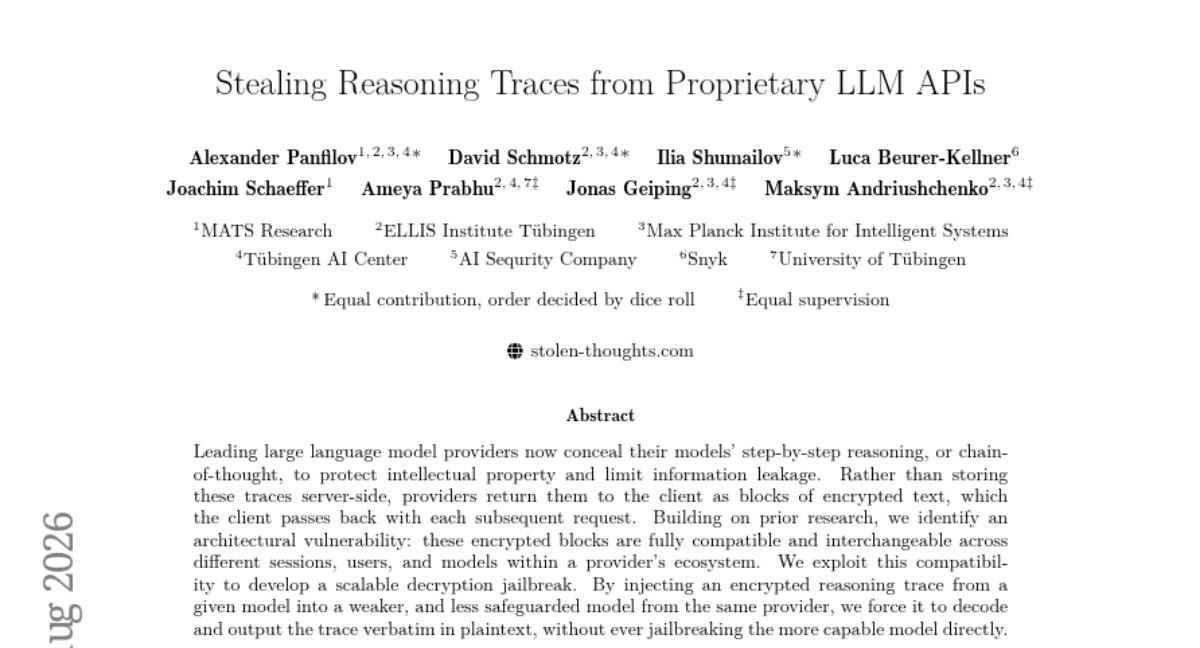
If you thought encrypting LLM reasoning traces was a solid IP protection strategy, think again. This post exposes a fundamental architectural flaw in how providers like Anthropic, OpenAI, and Google handle encrypted chain-of-thought blocks: because these blocks are interchangeable across sessions and models within the same ecosystem, you can inject a trace from a powerful model into a weaker, less-guarded one and get it to spit out the plaintext. Beyond IP theft, the researchers scraped over 315,000 reasoning blocks from public repos and recovered hundreds of PII artifacts and credentials — meaning developers are unknowingly leaking sensitive data every time they share session logs.
Takeaways3
- Encrypted reasoning traces are portable across models in the same provider's ecosystem, making them a viable attack surface for decryption via weaker sibling models.
- Developers sharing session logs publicly are likely leaking sensitive data embedded in opaque encrypted blocks they don't realize contain anything meaningful.
- Anti-distillation protections from major providers can be bypassed without ever directly jailbreaking the target model.